
From Washington to Brussels and even Asia, policymakers have become obsessed with the “Thucydides Trap”, a concept born from Graham Allison’s Destined for War, published in 2017.
We are endlessly warned that whenever a rising power challenges the hegemon, war is almost inevitable. This is convenient and lazy.
Allison, who served in the Reagan and Clinton administrations and has advised successive secretaries of defence – credentials that travel well through the propaganda channels of political elites on both sides of the Atlantic – himself argued the trap could be escaped. What Washington heard, however, was not the caveat. It was permission.
Destined for War has been sold as historical wisdom, but it is a political narrative dressed up as scholarship that normalises conflict triggered by Western military and economic interests. It invites us to sleepwalk into accepting confrontation as destiny rather than scrutinise the choices driving today’s tensions. That scrutiny would expose inconvenient truths about hegemony, resource grabs and a barely concealed disdain for others based on race and religion.
“
Why are we being forced to look at the 21st century through a 2,500-year-old lens of Greek city state warfare?
Why are Athens and Sparta, the stuff of Hollywood, rather than the accumulated experience of Asia, Africa or Latin America, elevated as the definitive guide to the future, as if they are a law of physics?
This is not just Western-centric. It is deliberately misleading.
By framing conflict as an iron law, the US and its allies can portray encirclement, sanctions and military deployments as reluctant responses to impersonal “structural forces”. War becomes an unavoidable product of history and conceals ugly motives. When that framing fails, the fallback is older still: “God is on our side”, as with the war on Iran.
The “trap” is a manufactured inevitability that serves hegemony and the military-industrial complex. It casts any rising nation – especially one that is culturally distinct and refuses to act as a compliant junior partner – as the source of instability. This is not insight. It is a narrative of control and unbridled dominance.
The central lie of the Thucydides ploy is that it is presented as law. Power transitions are discussed in the conveniently detached language of “structural realism”, as though they belong to the realm of gravity rather than politics. Once that is accepted, the moral content of policy decisions disappears.
With it goes accountability. If conflict is a “trap”, no one is responsible when tensions escalate. When alliances expand, when warships patrol ever closer to another state’s coastline, when sanctions disrupt entire regions, blame is shifted onto vague historical forces. It is no wonder that the US has been in a state of near-perpetual war since its creation.
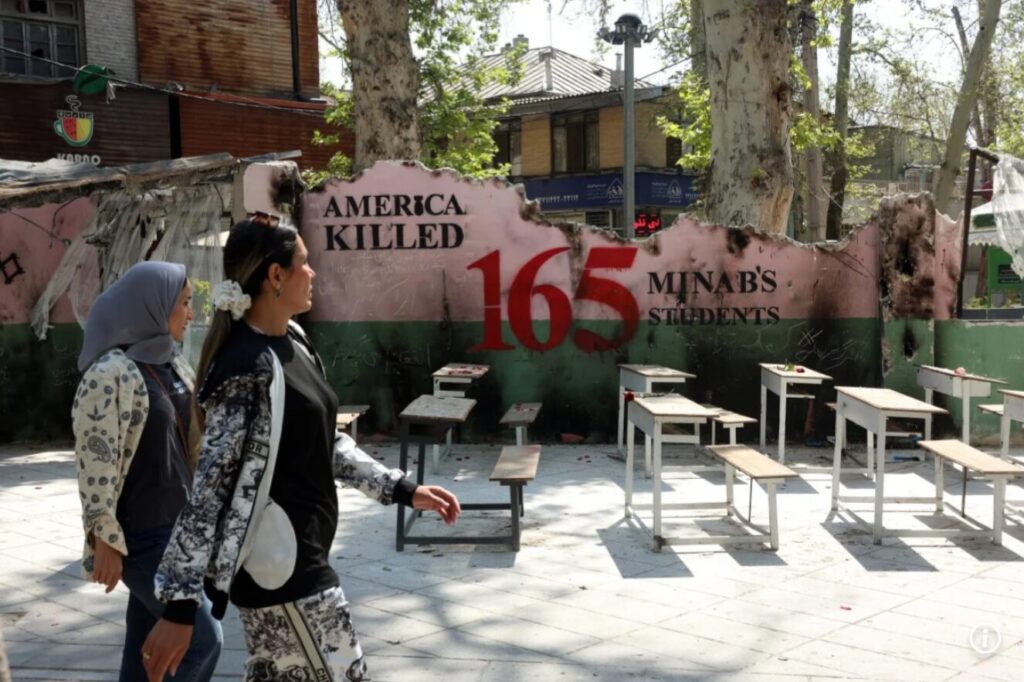
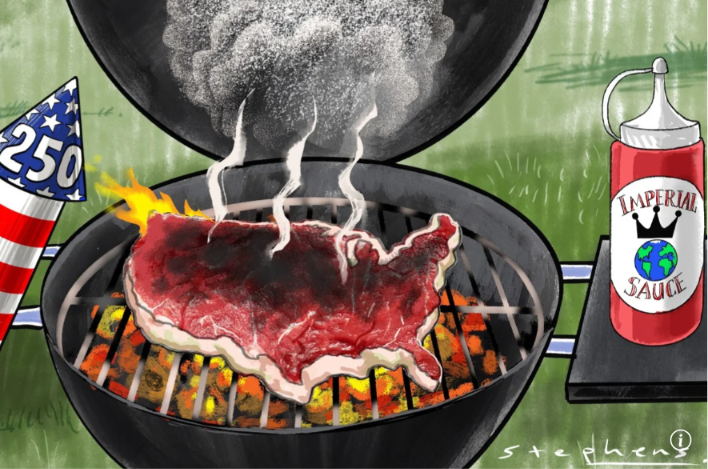
Courtesy: South China Morning Post
From Saigon to Baghdad to Kabul, Western power has been projected in the name of “security” and “democracy”, leaving instability and collapse in its wake. Local partners discovered too late that their protector was a fair-weather friend.
The language of inevitable US-China rivalry funnels enormous public resources into weapons systems to fight the “yellow peril” that deliver handsome profits to a select few, while fraying social contracts at home. It refuses to consider how China views the world, or accept its largely defensive posture. A feedback loop follows: inevitability justifies provocative policies; those policies fuel suspicion and arms races; rising tensions are then cited as “proof” that the theory was correct. The narrative becomes self-fulfilling.
What unsettles Washington is not China’s military power but the example its development represents. In a single generation, China lifted hundreds of millions out of poverty without Western permission or Western templates. For much of the Western establishment, this is less a human achievement than a threat. It undermines the assumption that Western institutions must sit at the apex of any legitimate global order.
The emergence of a multipolar world challenges a deeply ingrained sense of entitlement. Talk of “traps” is an attempt to discipline this transition. For the global majority, however, this moment offers the possibility of defining prosperity in more plural terms. That potential is precisely what makes the old centres of power uneasy.
Countries in Southeast Asia, Africa and Latin America are told they must “choose sides” – nations with trading ties to China stretching back centuries, whose futures are bound as much to Pacific as to Atlantic partners and have no interest in importing someone else’s anxieties or prejudices. The demand to align is not partnership. It is obedience and subservience dressed as strategic advice.
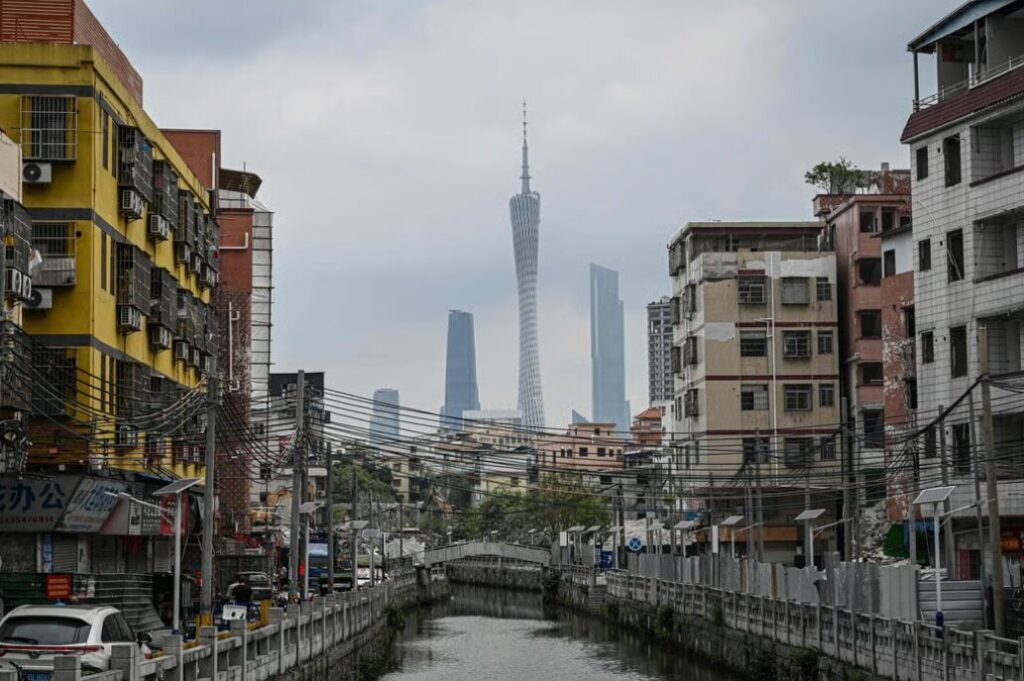
The city skyline and residential buildings along a canal in in Guangzhou on Thursday. China has been prioritising internal stability over global power projection. Photo: AFP
The real choice is not between Washington and Beijing. It is between an extractive, growth-at-all-costs model and genuinely resilient, self-sufficient societies. The Western model of globalisation increasingly resembles a universal pizza: uniform, processed, dependent on distant supply chains and sold as the only item on the menu. What most societies need to defend is their rice bowls – secure access to food and water, local productive capacity, robust governance and economies organised around constraints and social needs. The countries being pressured to choose sides have borne the heaviest costs in this game, with the pizza model that the US and its allies are forcibly thrusting on others being the catalyst of most global tensions.
The priority for these nations is to protect their rice bowls, rebuild what the extractive model has stripped away and chart paths that reflect their own histories and resource-constrained limits. This is not isolationism. It is self-determination and realism.
The Thucydides Trap is only as powerful as our willingness to accept manufactured narratives as historical law. If policymakers accept that conflict is preordained, they will neglect diplomacy, underinvest in cooperation and treat compromise as weakness.
The era in which a handful of countries claim the right to set the terms by which we understand the world and navigate it is ending. The multipolar world will not be risk-free, but it will be more progressive if it frees itself of false narratives. Its trajectory should be shaped by the global majority, not by narratives engineered to prolong the sunset of a single hegemon and it allies. The question is not whether we are heading towards a trap. It is whether we will continue letting those who built it tell us it was always there.

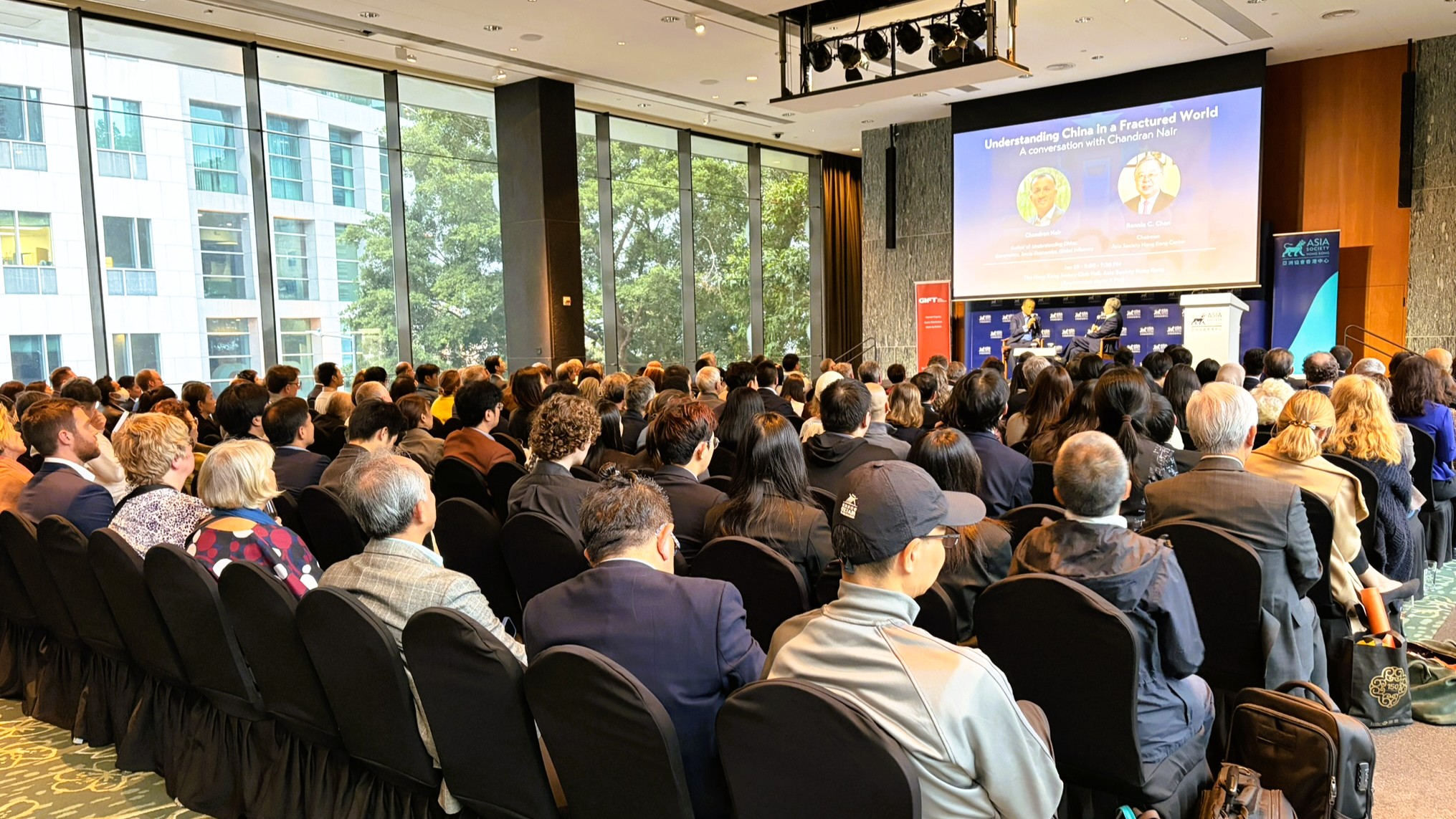
Chandran Nair
Chandran is the Founder and CEO of the Global Institute For Tomorrow (GIFT), a pan-Asian think tank dedicated to helping organisations navigate global complexities. His work focuses on the shift of economic and political influence to Asia, the evolving role of business in society, and the transformation of global capitalism.