Originally published in the South China Morning Post
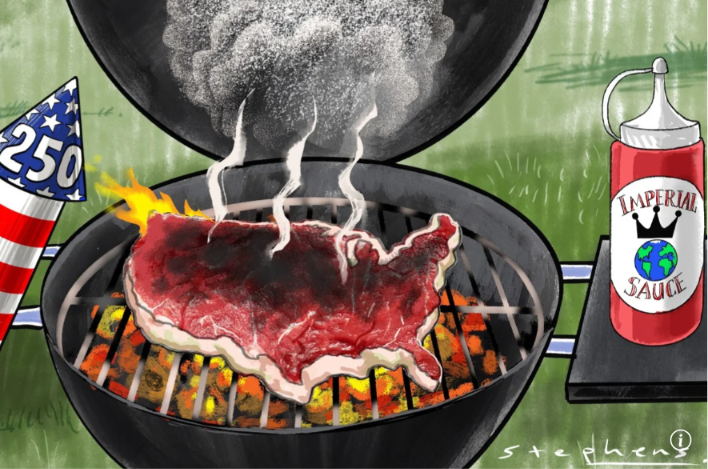
There will be parades and speeches, fireworks and barbecues, and a healthy dose of patriotism. This Fourth of July, Americans celebrate the 250th anniversary of their country’s independence from the British empire. Many remain unaware of when their continental republic became an empire of its own. Neither will many of them know that at the turn of the 20th century, the founding principle of the Declaration of Independence was betrayed, despite impassioned opposition from some of the most prominent intellectuals of the day.
The American Anti-Imperialist League counted among its members philosopher William James, industrialist-philanthropist Andrew Carnegie and Mark Twain, perhaps the most popular writer of the age. For years they lobbied to preserve America’s founding values and resist the path of European colonialism. They failed in their short-term objective against empire. The Philippines became an American colony in 1898 and remained so until its own independence in 1946.
Even so, they argued against government transgression more powerfully than anything heard at conferences today. The league’s official platform said that “subjugation of any people is ‘criminal aggression’ and open disloyalty to the distinctive principles of our government”, warning that an administration free to “organise a truth-suppressing censorship and demand of all citizens a suspension of judgment” would imperil representative government itself. If more Americans read this work, they might recall that patriotic dissent is the highest form of loyalty.
An American empire was never inevitable. It was hotly debated after the Spanish-American War, fought to liberate Cuba from Spanish colonial rule and settled when the United States bought the Philippines for US$20 million. Hong Kong was the staging ground from which America’s Asiatic Fleet sailed to its swift and decisive victory at Manila.
Then US president William McKinley, who annexed Hawaii and took the former Spanish territories, has become an object of current US President Donald Trump’s admiration. The same nostalgia for imperial greatness appears to motivate Trump’s designs on Greenland and the Panama Canal as well as his suggestions of absorbing Canada into the union.
What are Trump’s motivations for wanting the US to take over Greenland?
Executive overreach is the graver constitutional violation, and the one that would have most infuriated the anti-imperialists. The decision to attack Iran without congressional approval could only be managed through secrecy. That there have been accusations of the personal enrichment of those close to the administration from wartime oil price swings only highlights the drift from the nation’s founding values.
William Graham Sumner, one of the founders of American sociology, wrote that the war with Spain had been “precipitated upon us headlong, without reflection or deliberation”. Everything “was done to make us throw away sobriety of thought and calmness of judgment”, he wrote, adding: “Patriotism is being prostituted into a nervous intoxication which is fatal to an apprehension of truth.” This sounds familiar.
Now the US operates an empire in all but name. American technology and culture shape the choices of billions who are de facto governed by policies and actions with no representation and no recourse. They are coerced through sanctions and trade restrictions, their energy priced through the petrodollar system, their leaders removed when they prove uncooperative. The “international rules-based order” is imperialism with better branding.
Trump says Iran operation will last up to 5 weeks as death toll across Middle East surpasses 500
For Americans celebrating Independence Day, the arguments that hit home are rather economic and civil. Military adventurism drains budgets better spent at home. The Costs of War project puts the price of the post-September 11 wars at US$8 trillion, essentially a transfer of wealth from domestic needs to the military-industrial complex that would have horrified 19th century statesmen. Carnegie made the case in his 1898 address “Distant Possessions”, saying, “A tithe of the cost of maintaining our sway over the Philippines would improve our internal waterways; deepen our harbours; build the Nicaraguan Canal; construct a waterway to the ocean from the Great Lakes.”
As the American republic enters its 250th year, there is a glaring need to solve problems at home, such as ageing infrastructure, spiralling healthcare costs, lagging schools and unaffordable housing. Would Americans not be more prosperous, with greater collective well-being, if the country was governed as a well-run continental republic instead of a sprawling pseudo-empire?
David Starr Jordan, Stanford University’s first president, addressed the domestic challenge in an 1899 address: “The pomp of imperialism, the display of naval power, the commercial control of India and China, all these are as the bread and circuses by which the Roman emperors kept the mobs from their thrones. They kept the people busy and put off the day of final reckoning. … Meanwhile, the real problems of civilisation develop and ripen.”
If one thing is worth celebrating on the US’ 250th anniversary, it is that the tides of empire always turn. They turned on the Spanish, the British and every international power before them. The first half of 2026 suggests the shift to a multipolar world is accelerating. The sooner America refocuses its resources, inventiveness and people back to its own continent, the better for itself and, many would argue, for the world.

Eric Stryson is Managing Director of the Global Institute For Tomorrow (GIFT) in Hong Kong. He possesses expertise in governance, business model innovation, leadership transformation, talent development, and sustainability. He coaches leaders from business, government, and civil society to critically examine their roles, look beyond conventional wisdom, deepen their understanding of global issues, and take ownership of their impact on their organisations and society at large.