
International Women’s Day, 2026
Let me be direct. The celebratory rhetoric of International Women’s Day, while well-intentioned, has become a ritual that masks a far more unsettling truth. After decades of advocacy, diversity targets, and policy reform, we are not merely failing women. We are failing civilisation. And the reason is not that we have not fought hard enough, it is that we have been fighting the wrong war, inside the wrong system, by the wrong rules.
I have spent my career at the intersection of business and public policy, and what I see from that vantage point is this: both men and women are losing. Not to each other, but to a 200-year-old extractive operating system that treats nature, labour, and human potential as raw inputs to be consumed rather than cultivated. Until we name that system clearly, every conversation about gender equality is, at best, rearranging deckchairs.
The Architecture of the Problem
The numbers are no longer a warning. They are a verdict. According to the World Inequality Report, the global top 1% controls approximately 37% of all wealth, while the bottom 50% of humanity, some four billion people, share just 2%. This is not a market failure. It is the logical output of an operating system designed for accumulation, not circulation.
What accelerates this inequality is the great decoupling: the separation of the financial economy from the real economy. Global financial assets, such as derivatives, credit instruments, and speculative capital, now stand at roughly three to four times global GDP. We have engineered a world where moving numbers on a screen generates more returns than growing food, nursing the sick, or building the infrastructure that holds societies together. The financial economy has become the economy. Everything else is a footnote.
This decoupling has a gender dimension that Southeast Asia’s own data makes vivid. In Malaysia, the female-to-male ratio in tertiary education has reached 1.25. In the Philippines, it is 1.32. In Thailand, 1.25. Even in Singapore, women now outnumber men in universities at a ratio of 1.1. Women across the region are entering STEM in growing numbers, comprising over 56% of undergraduate STEM enrolments in some Malaysian institutions.
And yet, something troubling is happening in parallel. Young men are quietly exiting the formal economy. Malaysia’s male labour participation rate stands at 80.4%, but the jobs being secured by a growing cohort of non-graduate men offer diminishing wages, no long-term security, and no pathway into the financial economy where real wealth is now created. The digital divide does not just separate nations. It is fracturing the social contract within them, between those who participate in the financial economy and those trapped in the real one.
We have a silent crisis for men. And we have a glass ceiling that, even as women break through it, leads to a room where the rules remain extractive. Neither outcome is acceptable.
The Civilisational Crossroads
At China’s 2026 Spring Festival Gala, Unitree’s humanoid robots performed Kung Fu sequences, drunken boxing, and backflips, with a physical dexterity that stopped the world. It was not entertainment. It was a policy briefing in disguise.
Autonomous systems are no longer a horizon. They are here. AI agents are making underwriting decisions, managing portfolios, triaging patients, and soon, navigating our roads. The question policymakers and boards must now confront is not whether these systems will take over functions once performed by humans; they will. The question is: who governs them? What values do they embed? And when they fail, when the autonomous vehicle makes the wrong call, when the AI-driven hiring algorithm entrenches bias, who is accountable?
Cold financial logic cannot answer those questions. An ethics of care must. And that is precisely where the conversation about women’s leadership must be reframed, not as a social justice imperative, though it is one, but as a systems-design imperative for a civilisation at an inflection point.
“
The 21st century does not need more women to win at the extractive game. It needs women to change the game entirely.
Stewardship, Not Just Seniority
The 21st century does not need more women to win at the extractive game. It needs women, and the leaders who understand what women bring, to change the game entirely.
What I mean by this is specific and structural. The qualities that women have historically practised, often without recognition or compensation, empathy, systemic thinking, harm reduction, and the ability to hold competing interests in tension, are the exact qualities needed to govern AI, to regulate autonomous systems, and to design economies that circulate rather than extract. These are not soft skills. They are the operating principles of resilience.
Women are also, by social nature, community architects. Research consistently shows that women build social capital through networks and relational trust, while men tend to bond through shared competition, sport, gaming, and high-stakes finance. At scale, that difference matters. A boardroom or cabinet that integrates female systems-thinkers is not more “compassionate” in some vague sense. It is more structurally sound.
But this does not happen by accident, or by hitting a diversity quota.
The Policy and Business Imperative
To the corporate leaders and policymakers reading this: the ask is not charity. It is architecture.
We need to build the conditions, in governance frameworks, capital allocation, corporate culture, and public institutions, for women to develop agency, autonomy, and the confidence to lead not just as executives, but as stewards. Stewardship, as a leadership philosophy, is grounded in protection, preservation, rehabilitation, fairness, and harm reduction. It is, in short, what the next phase of capitalism must look like if it is to survive its own contradictions.
In Southeast Asia, this is both urgent and achievable. Our region is young, fast-growing, and at an institutional juncture where the rules of the next economy are still being written. Malaysia, Singapore, Vietnam, the Philippines, and Thailand collectively represent one of the most dynamic governance laboratories in the world. The choices made in our boardrooms and ministries over the next decade will shape not just our region’s trajectory but also offer a model or a warning to the world.
The question is whether we choose to embed stewardship principles into the architecture of that future, or whether we continue optimising for extraction until the pyramid collapses under its own weight.
“
Stewardship is grounded in protection, preservation, rehabilitation, fairness, and harm reduction.
A Different Conversation
This International Women’s Day, I am not calling for women to simply claim more territory in a broken system. I am calling for something harder and more important: for women to be the architects of the system that replaces it. And for the men in positions of power, in government, in capital, in the corner offices, to recognise that this is not a concession. It is the most strategically sound decision they can make.
The extractive economy is hollowing out the middle class, widening inequality, and leaving the next generation with fewer footholds than any before them. Stewardship is the antidote. And it is time, past time, to let it lead.
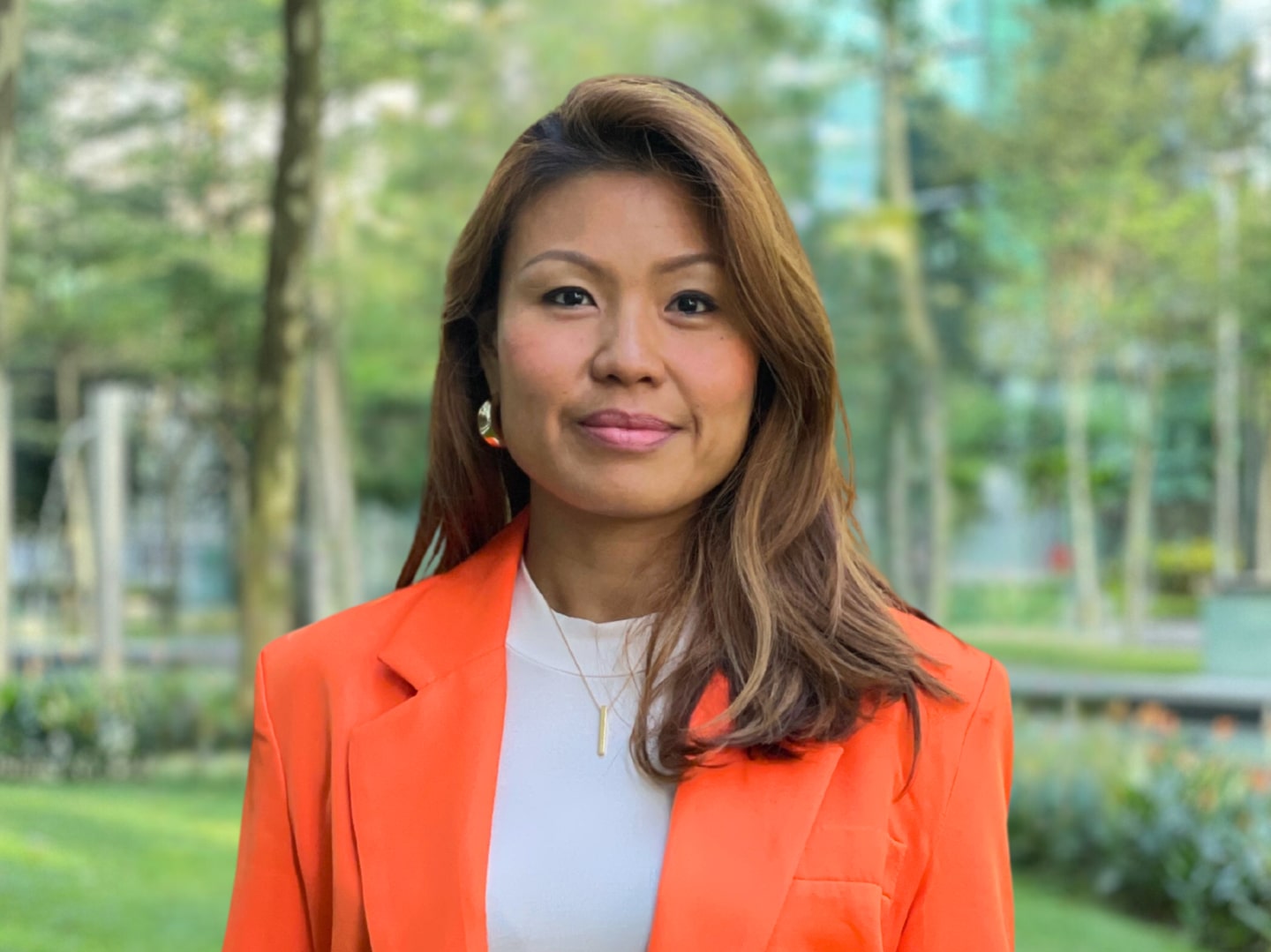
Pial Khadilla is the Managing Director—ASEAN of the Global Institute for Tomorrow (GIFT). She is adept at introducing critical perspectives and fresh ideas on leadership, organisational culture and purposeful corporate development to help companies navigate complexities with greater insight.