Why tune in?
Foster mutual understanding
About the webinar
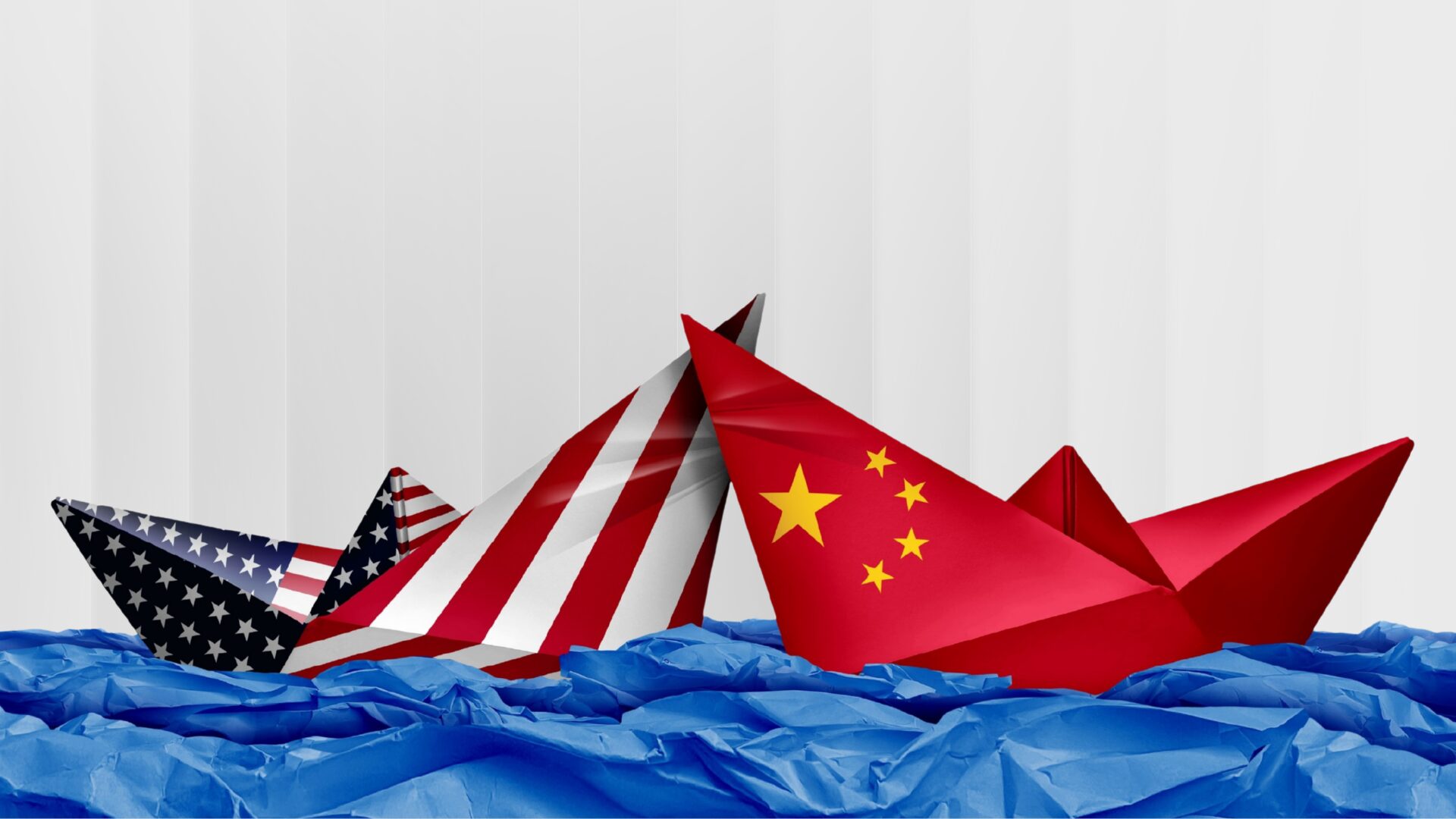
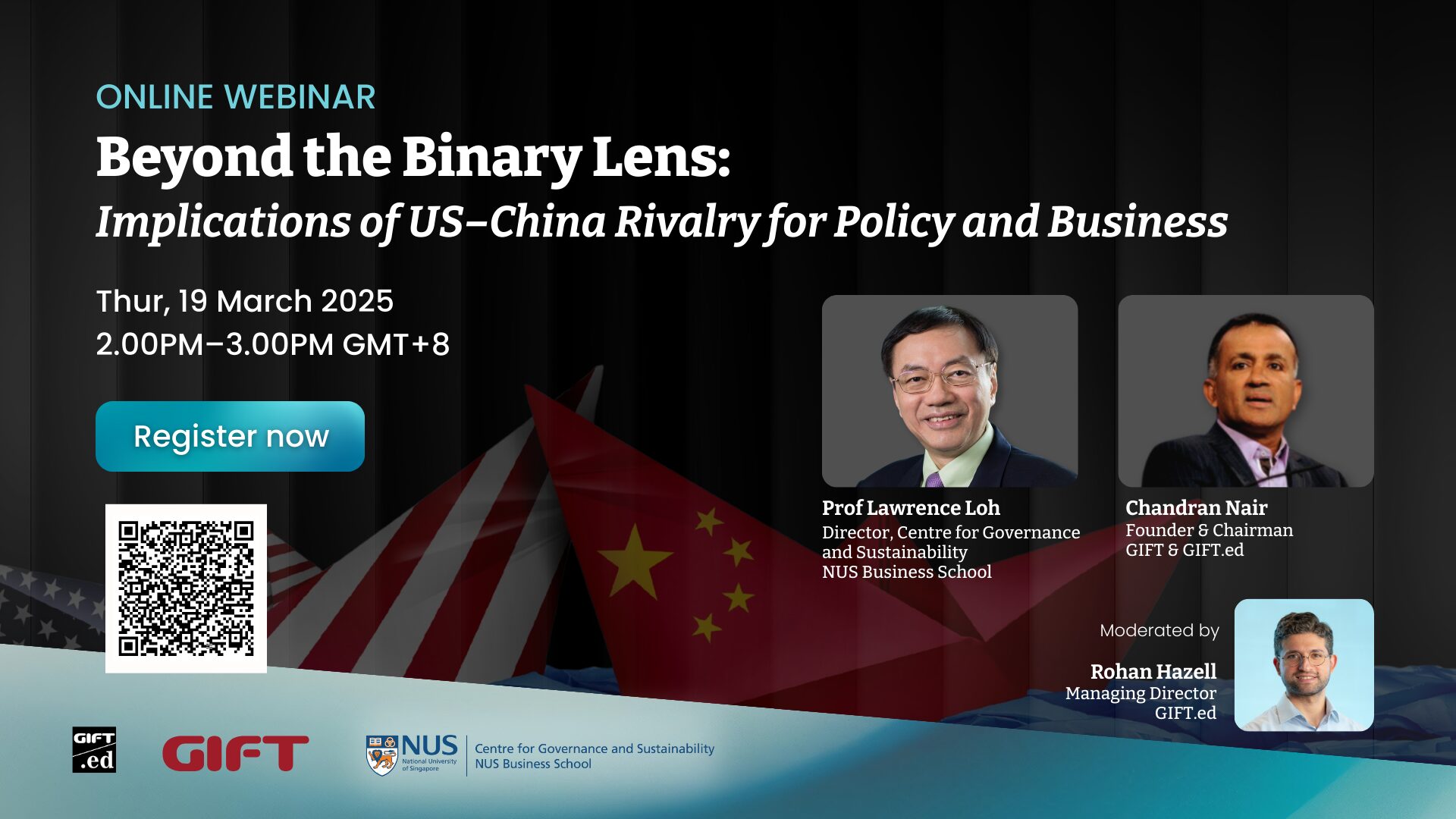
The discourse on China’s role in the emerging world order is still dominated by a narrow, binary framing centred on US–China rivalry. This obscures the reality that ASEAN, and Singapore in particular, occupies a strategically distinct position.
ASEAN maintains deep economic and cultural ties with China whilst enjoying credibility and access with and to Western governments and institutions.
This dual connectivity gives ASEAN an unmatched ability to interpret China in a grounded, non-ideological way, and to actively shape — not merely observe — a more accurate global understanding of China’s intentions, constraints, and evolution. Rather than approaching China through anxiety or ideological contestation, this webinar reframes the conversation toward strategic comprehension and practical clarity for decision-makers in business and policy.
It argues that ASEAN’s role is not passive: the region can help reduce misperceptions, stabilise dialogue between major powers, exercise its convening legitimacy through the ASEAN Way, and practise a deliberate geopolitical balancing act that few regions can credibly sustain.
Understanding China is therefore not about choosing sides but equipping leaders and organisations with the clarity needed to navigate a post-Western, multipolar world and to shape it. This means moving beyond a Western bipolar “Thucydidean” logic towards a more multipolar order grounded in regional solidarity and development as the primary outcome. In this emerging landscape, ASEAN has both the responsibility and the opportunity to actively shape the narrative and the future it wants to see.

China in the World Series
Part 2
Geopolitics & Conflicts: Is China’s Balancing Act a Global Good?
China in the World Series
Part 1
One Belt One Road: What’s Next in the New Multi-Polar World Order?
China in the World Series
Part 3
The Chinese Emphasis on Culture: Manifestation of Nationalism or a Return to Basics?
Speakers
A snapshot of our continually growing faculty, representing the best minds in business, economics, science, geopolitics, technology, policymaking, governance, and more.
Past Speakers
Conference Programme
Part 1
One Belt One Road: What’s Next in the New Multi-Polar World Order?
Time
Session
Time:
16:00 - 16:05
Session:
Time:
16:05 – 17:15
Session:
Panel 1
From Vision to Reality: Taking Stock of the Belt and Road Initiative
The Belt and Road Initiative (BRI) is the world’s largest ever infrastructure project, spanning over 140 countries, and is projected to significantly impact the livelihoods of approximately 3 out of 4 people worldwide. Its ongoing impact on the global economy, trade, and connectivity is immense.
With 2025 marking its twelfth year of inception, for many, the BRI has become a landmark effort of development, but to others, it may be viewed as an act of blatant economic imperialism.
Areas of discussion will include:
- Bridging the perceptions gap—does the world truly understand the motives behind the BRI? For example, to what extent does the shared humanity concept resonate
with others? - What has been the real impact on the countries and communities involved to date?
- What have been the major successes and shortcomings of the project so far? What lessons can the global community take away from the initiative?
- What truth is there if any to the “debt-trap diplomacy” narrative?
- Has the BRI prepared China for this trade war?
Panellist:
Prof. Yong Wang
Deputy Dean of the Institute of New Structural Economics at Peking University, China
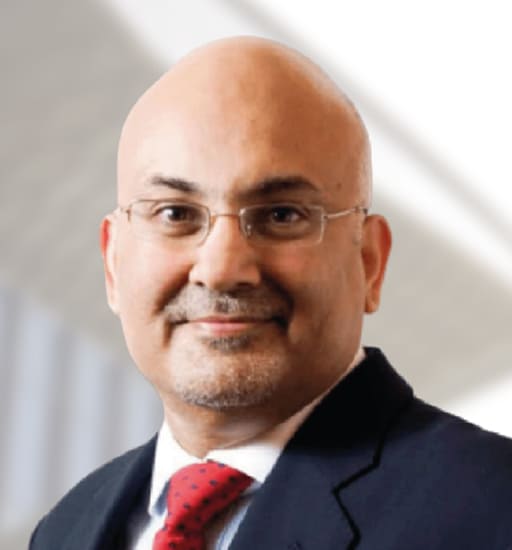
Mustafa Hyder Sayed
Executive Director at Pakistan-China Institute
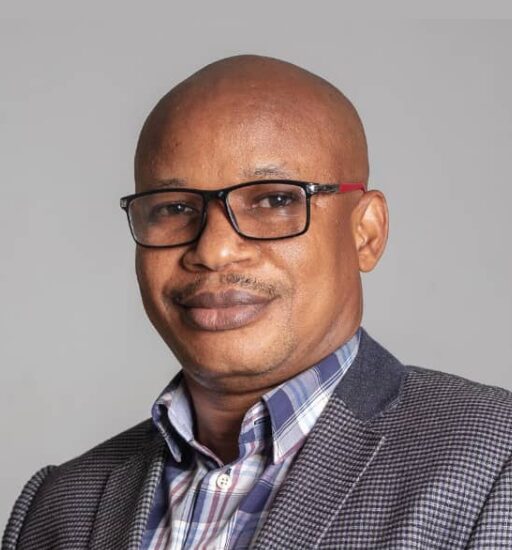
Prof. Efem Ubi
Professor of International Relations/Strategic Studies and China-Africa Studies, and Director of Studies at Nigerian Institute of International Affairs
Time:
17:15 – 18:30
Session:
Panel 2
Charting the Future Path: What's Next for the BRI?
The global majority is slowly but surely inching towards common goals of human development, national security, and peace, buffeted by rapidly shifting winds from turbulent climates—both political and environmental.
By 2027, the aggregate expenditure on the BRI is predicted to reach up to USD 1.3 trillion, stimulating over 2,600 projects around the world.
What does the future hold for the BRI and for the international parties that are positioned to benefit and what are the risks?
- How effective is China’s international relationship in addressing future challenges, especially considering the recent tensions that are unravelling around globalisation
and trade? Are other nations beginning to rally around the BRI in the evolving new world order? - What are the plans for global co-operation moving forward for BRI, and what are the implications and opportunities for international stakeholders?
- Is BRI proving to be an effective conduit for developing and propagating sustainable infrastructure and green technologies swiftly and at scale to build a more connected world?
Panellist:
Mukhtar Malik Hussain
Former HSBC Group General Manager and Regional Head of Belt & Road Initiative for HSBC Asia Pacific
Hussein Askary
Founding Board Member and Vice-President of the Belt and Road Institute in Sweden
Dr. Zeying Wu
Research Assistant Professor at Lingnan University, Hong Kong
Time:
18:30 – 19:00
Session:
Closing Keynote Remarks
Prof. Rana Mitter
ST Lee Chair in US-Asia Relations at the Harvard Kennedy School
Partners


AI is reshaping the foundations of law, technology, and leadership, challenging us to design systems that serve both people and the planet
Join us to explore how regenerative thinking can guide policy, innovation, and justice towards a more inclusive future.
More insight and resources
Catch up on key insights from GIFT past conference series—Watch, Read, and Explore!