

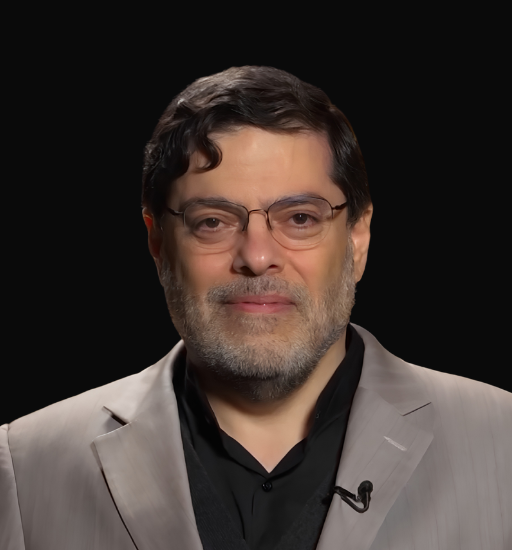
Professor Seyed Mohammad Marandi is an Iranian-American academic, political analyst, and former adviser to Iran’s nuclear negotiation team, currently serving as a Professor of English Literature and Orientalism at the University of Tehran. A dual citizen of Iran and the United States, he is widely recognised for his close ties to the Iranian government and frequent commentary on US–Iran relations, regional security dynamics, and Middle East geopolitics across major international media outlets, including CNN, BBC, Al Jazeera, and RT. In mid-2026, he has been actively engaged in high-profile discussions on the implications of the US–Iran Memorandum of Understanding (MoU), Iran’s strategic recalibration with Gulf states and Turkey, and the escalating regional tensions following renewed US airstrikes in July 2026.
Marandi holds a PhD from the University of Birmingham, where his 2003 thesis, Lord Byron, His Critics and Orientalism, was positioned as a response to Edward Said’s seminal work. His scholarly contributions include co-authored chapters such as “Oppressors and Oppressed Reconsidered: A Shi‘itologic Perspective on the Islamic Republic of Iran and Hezbollah’s Outlook on International Relations” (2016) and “The Khamenei Doctrine: Iran’s Leader on Diplomacy, Foreign Policy and International Relations” (2018). His most recent academic publication, “Empty Time and the Split Subjectivity in Virginia Woolf’s Mrs. Dalloway: A Deleuzian Analysis,” appeared in Research in Contemporary World Literature in 2024. Beyond academia, he remains a prominent public intellectual, contributing opinion pieces to Al Jazeera, Middle East Eye, and Tehran Times, and participating in policy dialogues on Iran’s foreign policy and information warfare strategies.