In June 2026, the UN’s Third World Ocean Assessment, compiled by 600 scientists from 86 countries, delivered its verdict on a global asset that no corporation ever puts on its balance sheet: the ocean’s capacity to sustain human life. The rate of global sea-level rise has doubled in a single decade, surging from less than 2 millimeters a year before 2015 to 4.3 millimeters in 2023.
That rise is the ocean registering decades of absorbed heat: it has taken in roughly 90 per cent of the excess warmth from fossil fuel emissions. Alongside it, the assessment documents industrial overfishing and pollution pushing marine ecosystems, and the food systems that depend on them, beyond their capacity to recover.
Now, trace that environmental bill to a business that has absolutely nothing to do with the sea. When marine protein grows scarce, global food prices spike across the board. The FAO’s State of World Fisheries and Aquaculture 2026 estimates that aquatic foods supply at least one-fifth of the animal protein consumed by 3.1 billion people, with Asia consuming nearly three times as much per person as Africa. That inflationary ripple quickly reaches a bank’s borrowers in Kuala Lumpur, a European logistics firm’s wage demands, and a Midwestern manufacturer’s customer base. These businesses caught no fish and they pollute no water, but they must pay anyway.
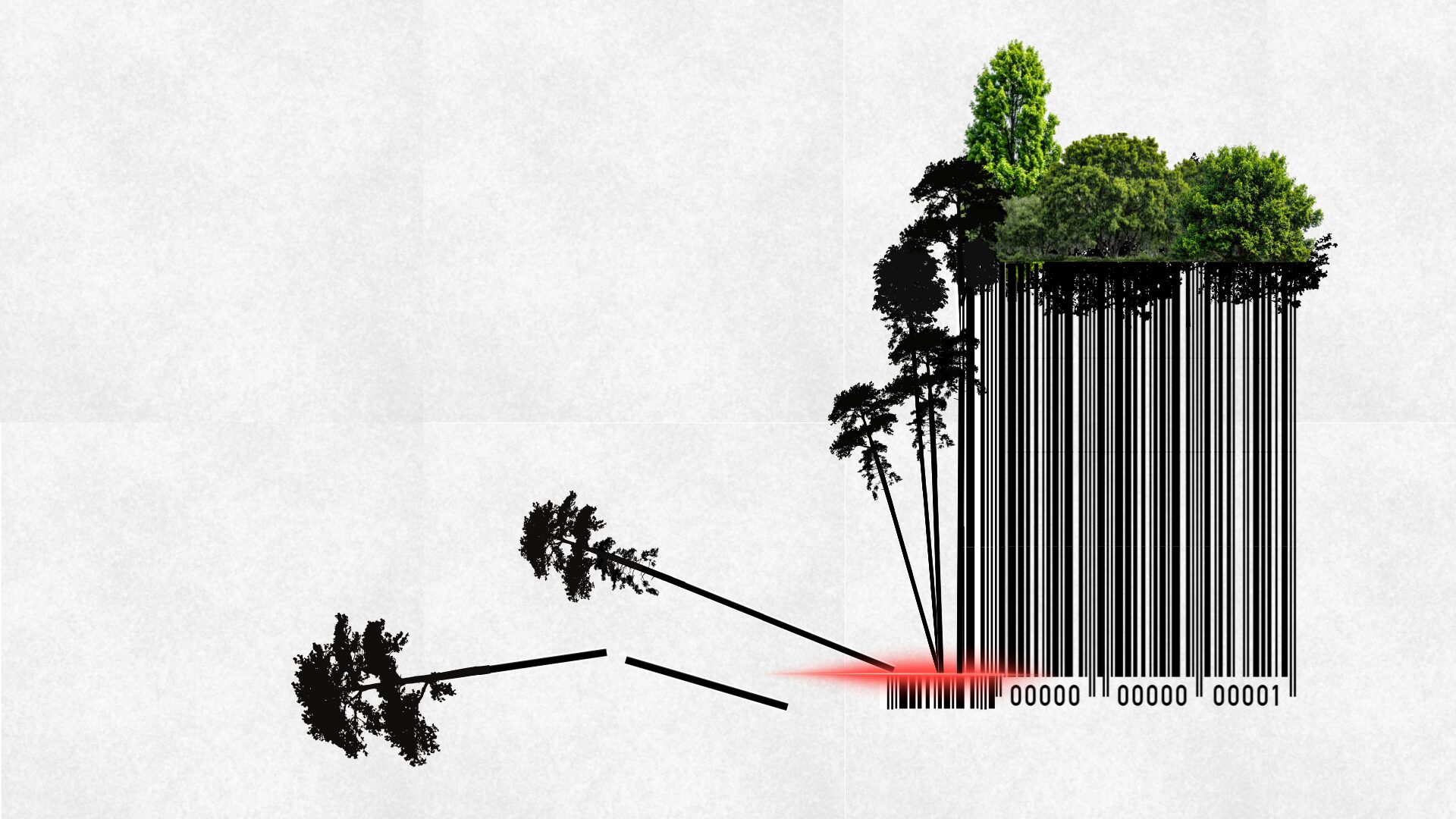
This is the fatal flaw built into our financial architecture. The extractive model prices only what crosses the firm’s own physical ‘fence’, treating everything beyond it as an “externality”, someone else’s problem. But damage does not magically vanish just because it is omitted from an Excel sheet. It travels through the food supply, the labour market, and the consumer base, eventually landing right back on the books as an unchosen expense.
“
These businesses caught no fish and they pollute no water, but they must pay anyway.
How did the world’s boardrooms come to treat damage on this scale as someone else’s problem?
The answer was written in 1970, when Milton Friedman famously declared that a company’s sole social responsibility is to increase its profits. Within a generation, that argument stopped being an argument and became the corporate world’s default operating system. Boards adopted it; business schools preached it, and executive compensation was entirely re-engineered around it.
Today, most corporate leaders don’t even cite Friedman. They don’t even know they are quoting anyone. They simply assume, as an unassailable law of nature, that a firm exists exclusively to maximise returns for whoever happens to hold the stock this morning.
But that assumption carries a compounding cost. And for decades, it has been paid quietly, out of sight, by the people inside the machine.
When a firm’s singular purpose is shareholder optimisation, every human activity must justify itself in those sterile terms or face liquidation. The work becomes heavily instrumented: an endless barrage of targets, scorecards, and digital dashboards that shrink a year of human effort into a single cell, either flashing green or bleeding red. A person’s professional identity gets compressed into whatever can be counted over a ninety-day sprint. The client relationship, once built on trust, hardens into a transaction to be closed. The craft that an employee once took genuine pride in becomes mere “business as usual“, the mechanical repetition of motions that no one actually believes in anymore.
This is why modern corporate work feels so soulless. Employees aren’t imagining this emptiness. Every metric they are measured against explicit signals that the things they value are not the things the firm values. The pervasive cynicism we see across modern offices isn’t a “moral problem” to be treated with a superficial engagement survey or a free lunch. It is much deeper: employees can read exactly what the firm rewards, and they respond accordingly.
The ecological bill and the human one are symptoms of the same missing discipline. There is a precise word for managing an asset you do not own on behalf of generations you will never meet: stewardship. To modern ears, it sounds like soft-hearted ethics. In reality, it is just rigorous accounting. It counts every cost a business creates, including the ones that land outside its own fence.
Malaysia is well placed to see this argument clearly.
Bursa Malaysia’s largest listed issuers now report under a national sustainability framework aligned with international standards, with the rest of the market to follow in phases, and the country’s largest institutional shareholders, among them Khazanah, PNB and the EPF, were built for precisely this kind of long-horizon ownership. The task for corporate Malaysia is to make sure the reporting reflects genuine stewardship of the underlying assets: the workforce, the land, the customer’s solvency. Disclosure can describe stewardship, but it cannot replace it.
We can see what stewardship looks like in practice by examining DBS Bank under Piyush Gupta. When he took the helm in 2009, the Singaporean bank was a regional laggard, so notoriously inefficient that locals joked its initials stood for Damn Bloody Slow. The classic extractive playbook was obvious: slash costs, outsource the technology, pump the stock price, and exit with a golden parachute.
Gupta chose a far harder path defined by two non-negotiable choices. First, he stayed close to the ground. He insourced the core technology that other banks were renting out, operating on the logic that you cannot steward a capability you have surrendered to a third-party vendor. He rebuilt the bank around the messy reality of the customer’s actual experience rather than the pristine view from the executive suite.
Second, he invested heavily in his people. Through initiatives like the DBS Academy, the bank retrained its existing workforce for a digital future rather than mass-firing them to hire cheaper, younger hands. For years, this strategy looked like an unjustifiable cost, which is exactly how a short-sighted board interprets patience.
DBS was not a flawless corporate fairy tale. The bank suffered high-profile digital outages that drew sharp regulatory penalties, the literal price of owning your own infrastructure instead of having a vendor blame. But the core philosophy held: the long term over the short, regeneration over extraction, and human capital nurtured rather than discarded. The definitive proof arrived after Gupta’s departure last year: the institutional discipline remained. He handed over a far more resilient bank than the one he inherited. Most outgoing CEOs cannot honestly say the same, primarily because they were never trying to.
Whether stewardship is morally admirable is beside the point. The question for today’s leaders is whether their businesses can survive the alternative.
The extractive model is failing because its hidden costs are now arriving on corporate balance sheets faster than ever before: the hollowed-out workforce, the depleted natural resource base, the financially eroded customer. And this time, they are landing on yours. You will either choose to steward the macro-systems your business fundamentally depends upon, or you will watch them collapse on your watch and mistakenly call it bad luck.
The leaders who recognise this shift early will inherit the next economy. The rest will spend their remaining careers optimising a firm that is quietly eating its own foundation, wondering all the while why the targets keep getting so much harder to hit.
Pial Khadilla is the Managing Director—ASEAN of the Global Institute for Tomorrow (GIFT). She is adept at introducing critical perspectives and fresh ideas on leadership, organisational culture and purposeful corporate development to help companies navigate complexities with greater insight.