Why tune in?
Foster mutual understanding
About the Conference
China’s current growth model has produced globally significant industries, including world-leading positions in EVs, batteries, solar, electronics, and machinery. Its spillover effects are visible in record trade surpluses that are reshaping supply chains, geopolitics, and the global rules of trade. Beyond GDP and exports, the critical question is how China’s state‑steered, investment‑heavy approach has generated both industrial breakthroughs and structural overcapacity, and what this means for businesses, investors, and governments beyond its borders.
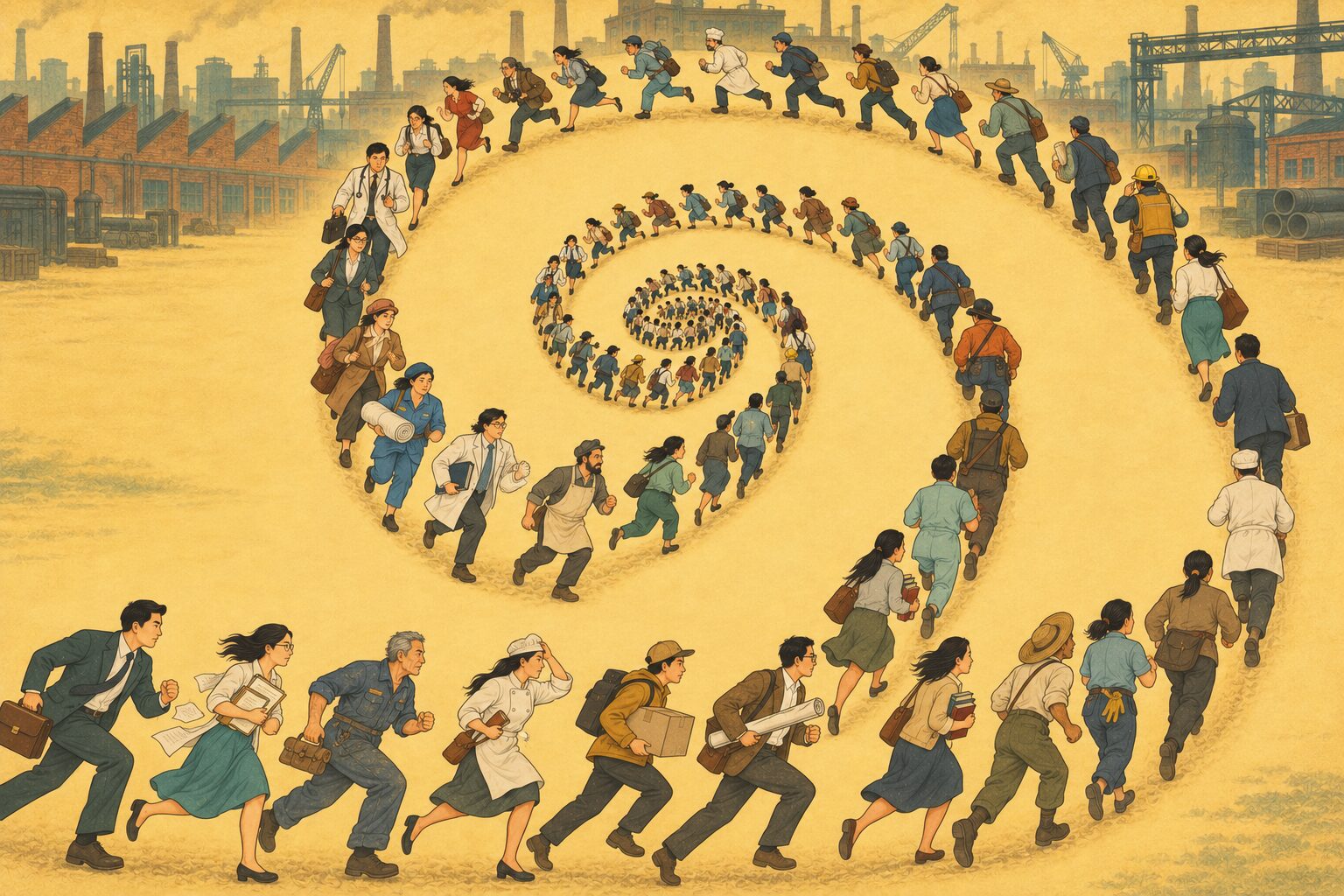
A hallmark symptom is chronic overcapacity in certain sectors, where factory output outstrips domestic and global demand at profitable prices, triggering domestic price wars, margin compression, and trade tensions. The term “involution” (neijuan, 内卷), first popularised in youth and workplace culture, was taken up by Chinese policymakers in 2024 to describe these pressures: intensifying competition that demands ever more effort or investment while generating weaker returns. Beijing has recognised this problem by placing “high-quality development” and more sustainable growth at the centre of its industrial policy agenda for the 15th Five‑Year Plan period (2026-2030).
International media have since cited “involution” in critiques of China’s overcapacity and government subsidisation. However, these dynamics are not unique to China and have been the norm in the development of many advanced and developing economies throughout history. The U.S., for example, has faced analogous episodes in the past, from farm overproduction and wheat stockpiles to excess capacity and restructuring in steel, autos, and semiconductors. Similar pressures with trade distortions and geopolitical spillovers have appeared elsewhere in different guises:
- East Asia’s semiconductor industries
- Western green‑tech subsidies
- Platform and gig economies
- Arguably, today’s surge in the AI investment, where vast capital, much of it led by U.S. firms and global capital markets, is chasing uncertain returns with potentially catastrophic global risks
- Society and culture, where related concepts such as “burnout” and “zero‑sum competition” are familiar and pervasive
This virtual conference will explore:
- The history of China’s growth model
- Parallels in other economies and societies
- How global capitalism drives overcapacity and overconsumption, and its international impact
- Policies and forms of cooperation that could help move economies away from a devastating race to the bottom
China in the World Series
Part 2
Geopolitics & Conflicts: Is China’s Balancing Act a Global Good?
China in the World Series
Part 1
One Belt One Road: What’s Next in the New Multi-Polar World Order?
China in the World Series
Part 3
The Chinese Emphasis on Culture: Manifestation of Nationalism or a Return to Basics?
Speakers
Hear from the thought leaders and practitioners shaping this year’s conference conversations.
Past Speakers
Conference Programme
Beyond Involution and Overcapacity: Can China and Other Economies Escape the Inherent Trap of Capitalism?
Time (Hong Kong / UTC +8)
Session
Time:
04:00 - 04:05 PM
Session:
Time:
04:05 - 04:30 PM
Session:
Keynote Remarks: TBC
Prof. Mohammad Marandi
Political Commentator; Professor, University of Tehran
Time:
04:30 – 05:45 PM
Session:
Panel 1
Industrial Miracles, Involution, and Overcapacity: A Uniquely Chinese Growth Model or an Intrinsic Part of Global Capitalism?
Four decades of heavily synchronised industrial planning and deep capital deployment have given China dominant positions in sectors from clean-energy equipment to advanced electronics. This panel explores how China’s industrial trajectory unfolded, and why it is now being characterised as an “involution” (neijuan, 内卷) – a concept that originated in classrooms and the workplace before migrating into factory floors and boardrooms.
Amongst the Chinese, the term speaks to something more than economics: a sense that constant striving in schools, careers, and companies no longer converts into commensurate progress. Outside China, comparable features have appeared under other labels and in different forms, both in modern times and throughout history:
- Cyclical gluts in East Asia’s chip industry
- Subsidy-fuelled buildouts in Western clean-tech manufacturing
- Repeated global banking crises stemming from unfettered profit-chasing in more clients and increasingly complex and opaque products and services
- Intensive investment in AI with growing fears of a bubble
- Exhaustion widely reported across app-based and freelance work, etc.
The discussion asks whether these are unconnected episodes, or manifestations of a common pressure arising from how contemporary economies pursue perpetual growth.
Potential discussion areas:
- A retrospective analysis: What combination of state direction, financing, and local competition steered China toward its current growth model? What have we learnt from other neoliberal capitalist models adopted by other economies?
- The concept of “involution”: Beyond the factory floor, what does “neijuan” reveal about pressure inside Chinese classrooms, careers, and family life, and why has it resonated so widely locally and abroad?
- Consequences beyond the factory gate: How has exported capacity altered pricing, sourcing decisions, and diplomatic relationships over the past decade?
- Growth models around the world: Do chip-sector gluts in East Asia, clean-tech subsidy competition in the West, the threat of an AI bubble, and burnout in gig work reflect the same underlying features of involution, overcapacity, and overconsumption?
Panellists:
Dr. Naji Abi-Aad
Chief Operating Officer, Petroleb & Senior Advisor on Energy Studies, Gulf Research Center
Daniel Levy
Political Commentator & President of the U.S. / Middle East Project (USMEP)
Prof. Kevin Tu
Chief Advisor China, Agora Energiewende; Adjunct Professor, Beijing Normal University
Alex Krainer
Market Analyst (Commodities, Geopolitical Economics), Researcher & Author
Time:
05:45 – 07:00 PM
Session:
Panel 2
The Future of “High-Quality Development” for China and the World: Breaking the Involution Cycle, the Crisis of Producing for Overconsumption Driven by Under-pricing
Under the banner of “high-quality development”, Beijing’s 15th Five-Year Plan for 2026-2030 seeks to address involution and overcapacity by curbing margin-eroding local competition, consolidating crowded industries, and moving beyond GDP-centric growth.
This panel explores whether these commitments can tackle the structural incentives behind the problem, and what parallel efforts elsewhere may offer as precedent or warning. For China, the test is whether sectors long characterised by aggressive price-cutting and razor-thin margins can move toward more stable competition, while allowing excess capacity to be absorbed or phased out without weakening the jobs and investment on which growth still relies. The issue is not only industrial, as it is also tied to wider social and cultural pressures.
For the rest of the world, the stakes are just as pressing. Reflexive countermeasures such as tariffs, matching subsidies, and relocated production risk simply shifting the same dilemma elsewhere. Rather than solving the problem, they may leave workers, businesses, and policymakers worldwide to shoulder the fallout. More broadly, global consumption-driven growth has encouraged the relentless pursuit of ever-cheaper mass production, often at significant social and environmental cost.

The discussion asks what a genuine break from the prevailing growth models would look like, and whether China’s policy agenda, alongside responses from the rest of the world, can deliver real change.
Potential discussion areas:
- A policy blueprint: What might the 15th Five-Year Plan’s measures realistically change, where earlier attempts have arguably fallen short?
- Lessons for the world: What can subsidy debates and past industrial adjustments experienced by other countries and regions, together with China’s current policy shifts, offer as guidance, or warning, for China and the world at large?
- Adaptation for businesses: How should companies and investors exposed to affected industries adapt as the age of hyper competitive advantages, strategies, and “making things cheaper” pose serious challenges to societies?
- Cooperation instead of escalation: What shared arrangements could manage spillover effects without deepening trade fragmentation?
- Society beyond the balance sheet: Could “high-quality development” also ease the social and cultural pressures that involution has come to symbolise, in China and elsewhere?
Panellists:
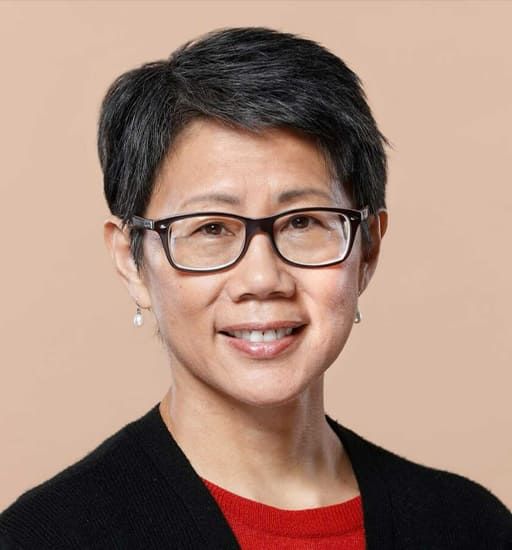
Prof. Christine Loh
Dr. Fithra Faisal Hastiadi
Expert Staff / Spokesperson, Government Communication Agency, Indonesia
Jeremy Bentham
Chair (scenarios), World Energy Council
Prof. Busani Ngcaweni
Director of Centre for Public Policy and African Studies, Johannesburg Business School, University of Johannesburg
Time:
07:00 PM
Session:
Register now to understand how China and the world can break from current capitalist growth models for a more sustainable, high-quality future.
Gain strategic insights into China’s evolving role in a world built on overcapacity, hyper-competition, and consumption that is driving a global race to the bottom.
More insight and resources
Catch up on key insights from GIFT past conference series—Watch, Read, and Explore!
![[NEW] The Geostrata Long Blue Logo](https://global-inst.com/wp-content/uploads/2025/08/NEW-The-Geostrata-Long-Blue-Logo.png)