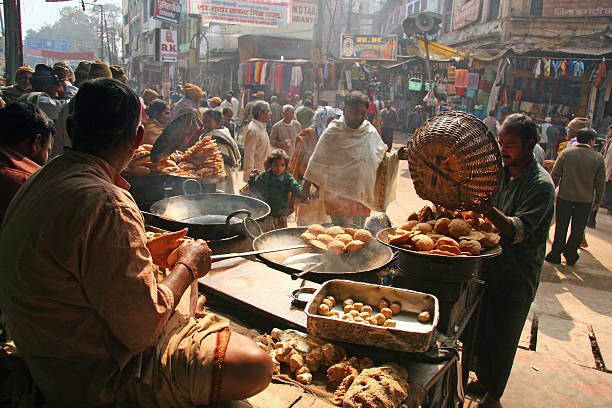
Despite a rich culinary culture shaped by centuries of diversity rooted in local agriculture, religion, trade, migration, and empire, the unsavoury reputation of present-day India’s
street food stands in stark contrast to its deep heritage. Well-known terms like “Delhi belly” and “Bombay runs” have been popularised by travellers for years, and now such stereotypes are further perpetuated by social media and AI.
Approximately 10 million street food vendors operate throughout India, with an estimated 1.2
million households dependent on street vending as their primary source of income. While the sector is celebrated for its vibrant, historically rich culinary culture, passionate practitioners, and diverse cooking methods, inadequate sanitation often undermines the vendors’ working conditions.
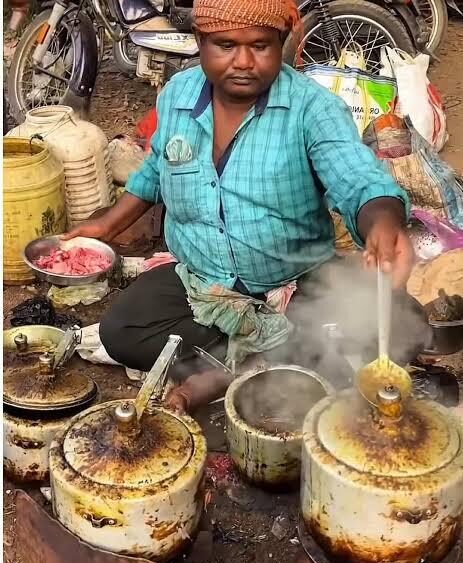
In this informal food economy, limited infrastructure and regulatory support, and uneven compliance contribute to public health concerns, lower visitor confidence, congestion, and pollution. However, many of these issues are structural and beyond the individual vendor’s control.
So, what does a safe plate of street food have to do with a well-maintained toilet?
And why could drawing on shared-infrastructure approaches to support street food vendors create a positive ripple effect that reaches well beyond a plate of safe food?
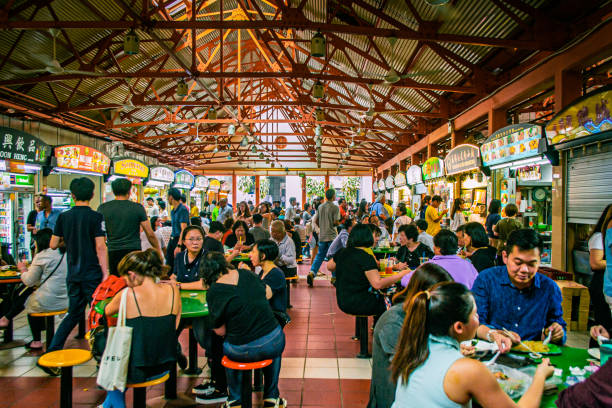
Exploring Singapore’s model offers a stronger understanding of the transferable principles and potential multiplier effects of providing street-food vendors with reliable shared infrastructure.
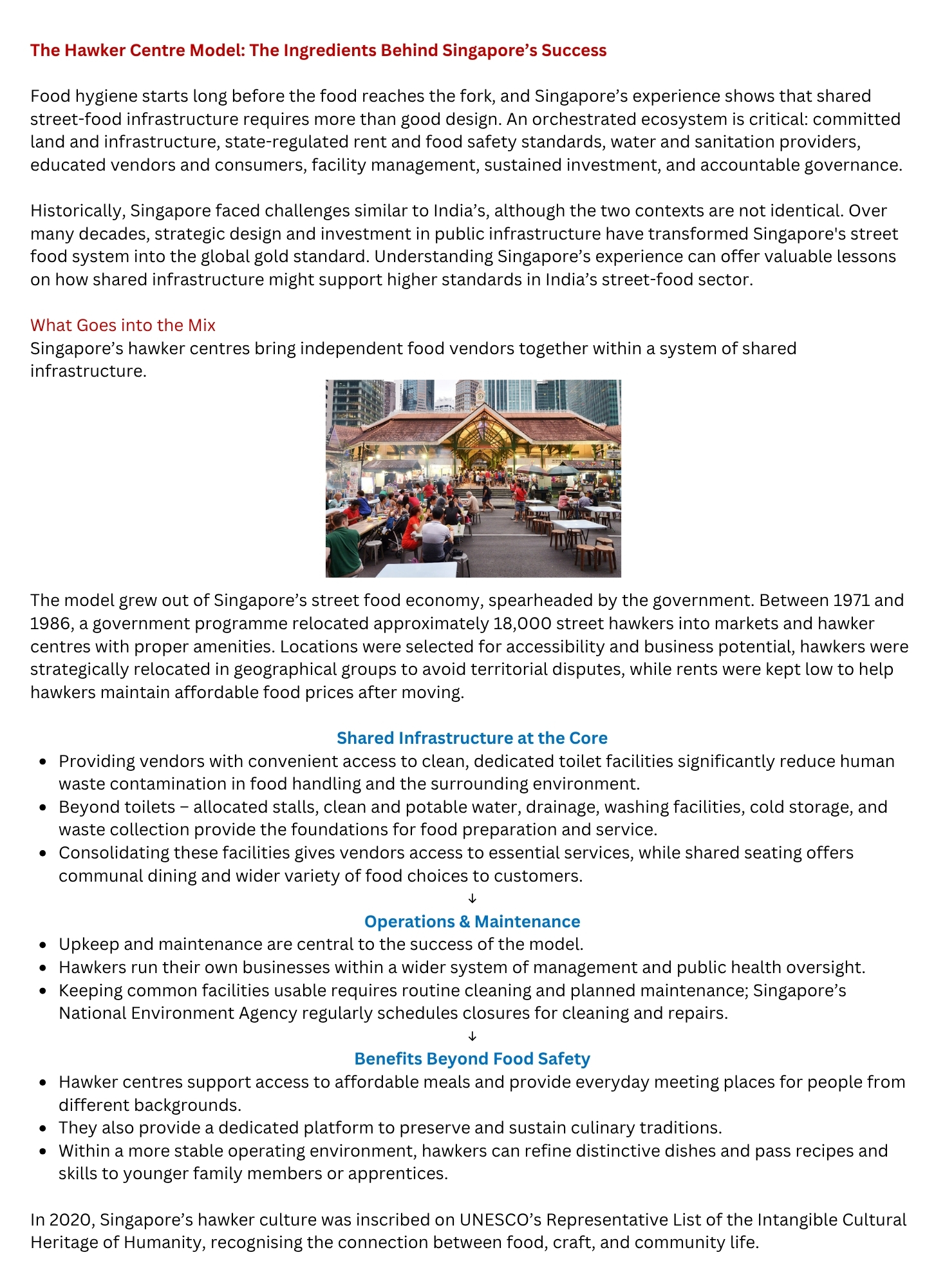
Adapting the Recipe for India
Singapore’s model cannot simply be transplanted to India; its relevance must be assessed against local conditions and existing initiatives. The opportunity is not to replicate Singapore’s system, but to identify which principles, i.e. reliable services, affordable participation, accountable management, and public-health oversight, can be adapted to India’s local realities. The measures of success will be economic viability, financial sustainability, social impact, and scalability, anchored in a deep understanding of local factors.
Given the variety of food preparation methods and traditions in India’s culinary landscape, meeting these needs will be imperative. Some foods need refrigeration, while others need space for soaking, fermentation, or fresh preparation. Facilities designed around these practices could support hygiene while protecting culinary variety.
Differences between neighbourhoods and between states will require locally appropriate approaches shaped by local needs, vendor and consumer demographics, the facilities to be shared, management responsibilities, and vendors’ ability and willingness to participate. Customs, culture, education, and compliance are inextricably linked and play a big part in both vendor and customer behaviours. In parallel, securing government commitment across the relevant departments and levels to spearhead the initiative will be a critical success factor.
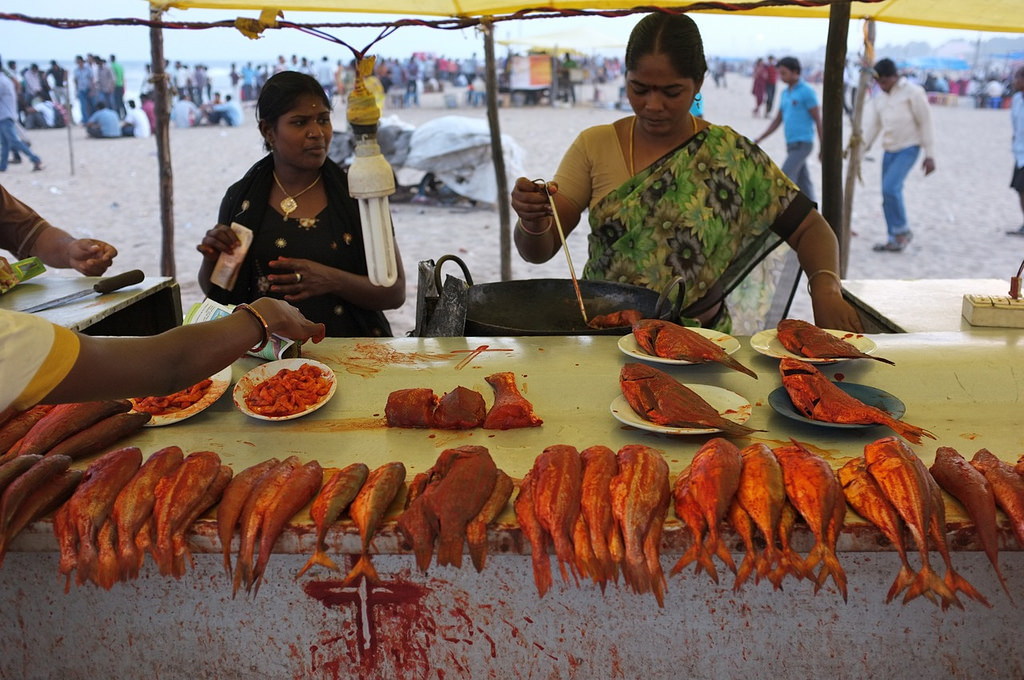
Ripples Beyond the Plate: The Cascade of Benefits
Linking street food vendors to clean toilets, bringing them within dedicated shared infrastructure, generates potential benefits that are mutually reinforcing with multiplying effects across the wider system. Reliable water access and waste services make good hygiene easier to maintain; consistent and highly visible hygiene standards can strengthen customer confidence; and that confidence could boost reputation, encourage repeat visits and more stable earnings. Where appropriate and locally designed, shared infrastructure could therefore support changes that extend from individual stalls to the wider economy.

Increasing F&B Standards, Reducing System-wide LossesThere is a cost to unsafe food – estimated at US$15 billion to India (World Bank, 2022). This estimate covers India’s entire food system. Improving street food infrastructure could contribute to reducing this burden by giving vendors reliable access to the facilities needed for safe preparation and service.
| Increasing Vendor Productivity, Strengthening Business ViabilityIn a 2023 Indian School of Business study covering more than 5,000 beneficiaries of India’s PM SVANidhi street vendor lending scheme, 95% were receiving their first bank loan through the programme. Pairing infrastructure improvements with support and financial literacy could have cascading benefits for vendors and surrounding businesses.
|
Lowering Healthcare Burdens, Building Consumer TrustA 2026 study of 170 street-food vendors in Pune, India, found that only one in three had adequate handwashing facilities, while just one in five had received food safety training. Preventing foodborne illness requires investment in both infrastructure and practical support.
| Adjusting to Climate NeedsThe International Labour Organisation projected that India could lose 5.8% of total working hours to heat stress in 2030, equivalent to the working time of 34 million full-time jobs. For street food businesses, shade, ventilation, and reliable essential services could help protect working hours and trading income. India also faces worsening urban flooding, which can be exacerbated by unchecked disposal of drainage-blocking waste (e.g. untreated used cooking oil, single-use cutlery, takeaway packaging, etc.).
|
Who Gets a Slice of the Benefits?
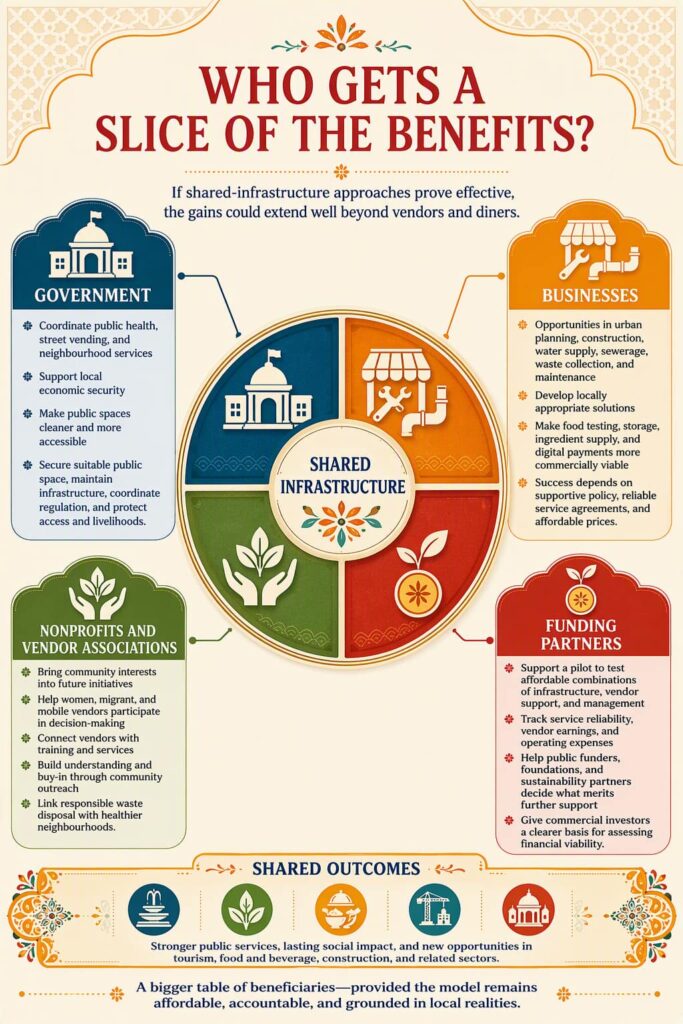
Vendors and diners would not be the only potential beneficiaries. If shared-infrastructure approaches proved effective, governments, businesses, nonprofits, and funding partners could benefit through stronger public services, lasting social impact, and new opportunities in tourism, food and beverage, construction, and related sectors.
Putting the Idea on the Table: Towards a Hawker Hub Blueprint for India
While the potential benefits are wide-ranging and compelling, moving towards implementation will require a deeper understanding of Singapore’s model, India’s local context and existing initiatives to determine which elements can be adapted for India.
GIFT has partnered with the World Toilet Organization (WTO) for the upcoming Global Leaders Programme (GLP), which will visit Hong Kong, Singapore, and Chennai, India. The cohort will develop a practical and scalable blueprint for a hawker hub pilot in Chennai for the WTO to implement. The proposal will examine the business and operating model, financing, sanitation infrastructure, vendor transition, and public-private collaboration. Through fieldwork and in-person engagement with Chennai’s stakeholders, participants will assess stakeholder needs, the local operating environment, commercial considerations, and implementation challenges that will determine whether and how the model could be taken forward. The longer-term ambition is to develop an approach with the potential to scale across India and internationally.
Learn more about the GIFT x WTO programme (link) and field project (link).
Watch the exclusive interview with the WTO’s founder and director, “Mr. Toilet”, Jack Sim here: Bringing Singapore’s Hawker Centre Model to India

Renée Chu is the Head of Programmes and Content at GIFT HK, where she oversees the Programme Management team and content creation. Her interests include business management, organisational culture, and female advocacy.