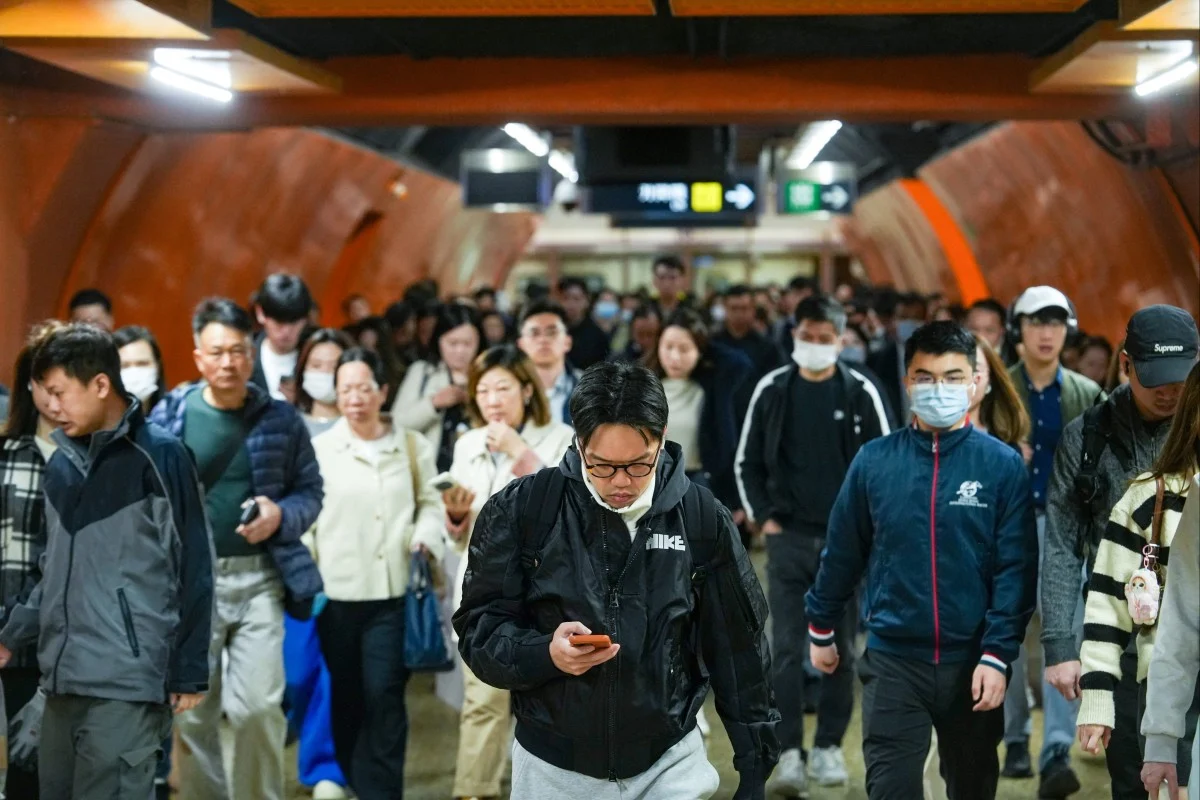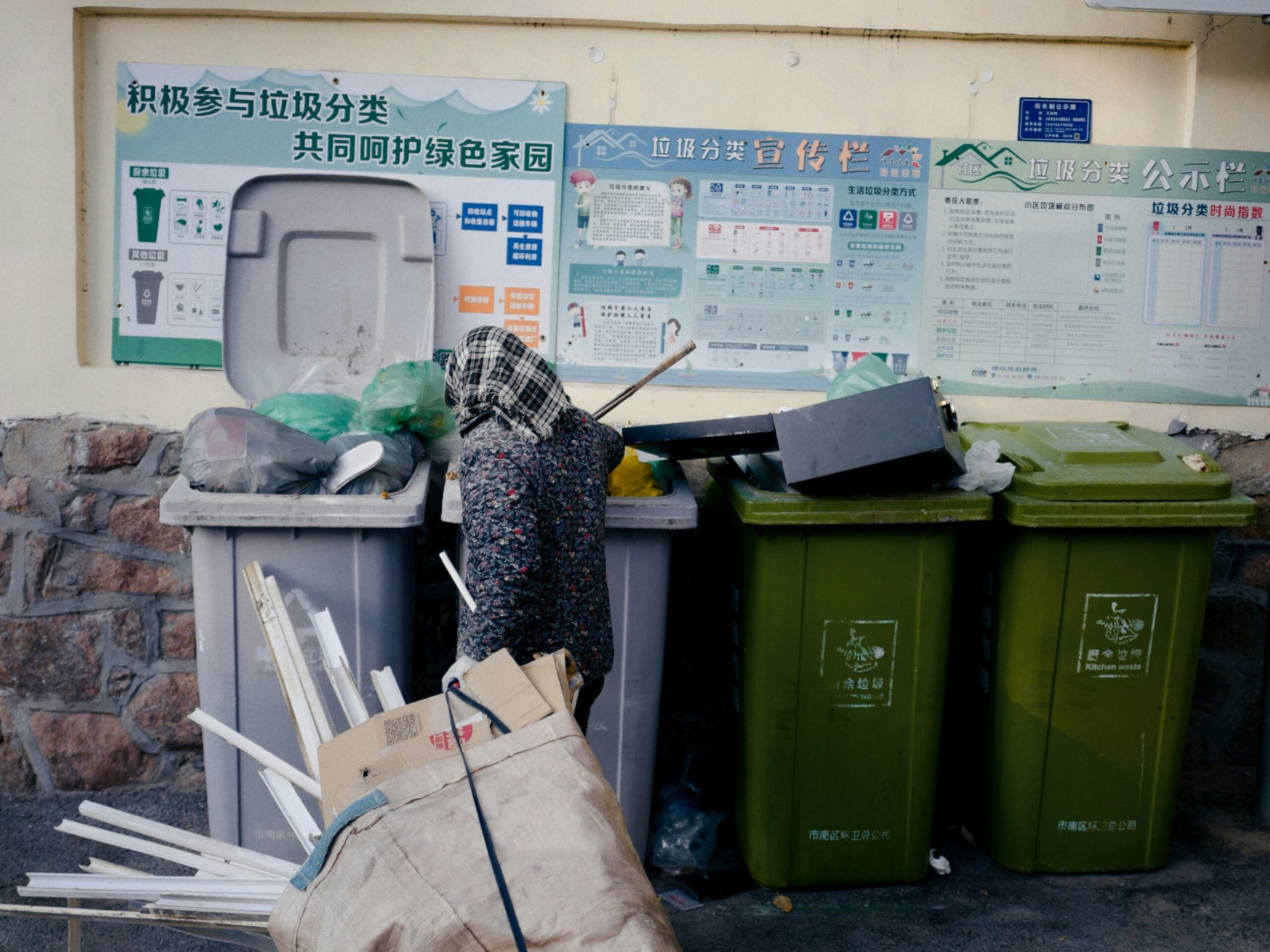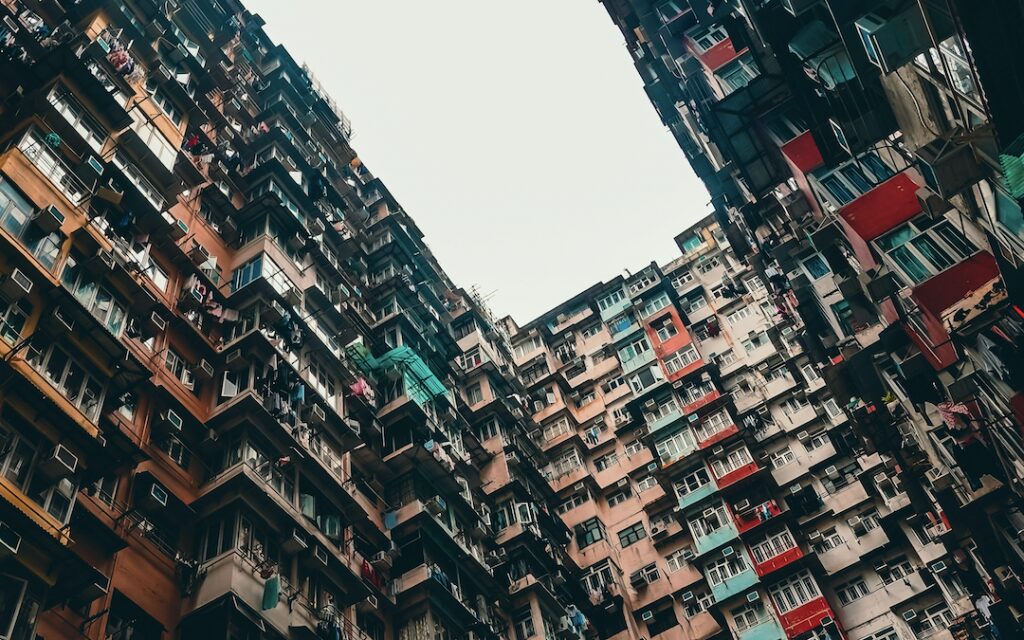
Hong Kong routinely places among the top cities of the world as an international financial centre, however beneath its towering skyscrapers and within its glittering harbours lies the stark reality – a housing crisis.
The city’s draws have led to certain pitfalls – the city’s taxes are among the lowest in the world, instead the government funds itself primarily through housing stamp duties. The city is compact and well-developed with admirable conservation of its natural capital, but as a result, only approximately twenty-five percent of land in Hong Kong is available to be developed for residential or commercial use.
As the city grew, this led to certain segments of the population taking increasingly desperate measures in order to survive. As of 2024, more than 200,000 residents tragically resort to living in subdivided flats as small as 20 square feet, their rooms stacked on top of each other and dubbed “cage homes”.
The government has mandates to provide sufficient, affordable public housing. However, various challenges have meant that the six-year waiting period for applicants to be allocated to public flats has approached two-decade highs, reaching a tipping point.
Well aware of these challenges, in 2017, GIFT brought together a cohort of twenty young leaders working across Hong Kong from a variety of backgrounds to devise policy recommendations for increasing housing affordability as part of the Hong Kong Young Leaders Programme (HKYLP). They worked together for an intense two weeks to prepare a public report, that was then delivered to government bodies and other organisations of interest concerned with the issues. Through GIFT’s proprietary education methodology of classroom sessions followed by research, on-the-ground stakeholder engagement and site visits, the teams devised five key pillars of recommendations, with short- to long-term policies under each pillar:
- Institutional Change
- Managing the Market
- Unlocking Land
- Quality of Housing
- Construction Cost and Technology
Since the publication of this report, policies under the first four of the five key pillars have been publicly announced by the government to have been implemented or worked upon. Below is a comparison between several of the report’s recommendations and the current reality.
1. Institutional Change
The Hong Kong government’s long-standing policy to monetise land as a major source of public revenue may conflict with providing sufficient and affordable housing for the population. In 2017, the Housing Department was under the Transport and Housing Bureau, while Lands and Planning Development was under the Development Bureau, highlighting potential conflicts and coordination issues. Resources and manpower might have been unevenly allocated between transport and housing concerns, with land operations functioning in silos from housing.
After engaging face-to-face with community members and site visits, the team of young leaders proposed that firstly, there must be a separation of the Housing Bureau and the Transport Bureau, to adequately address all housing-related policies and issues under one roof. Secondly, there must be a Housing Policy Commission with a chairperson, who takes feedback from various stakeholders such as civil society organisations, land developers, government bureaus, and the public, when determining solutions for the crisis.
On 1 July 2022, under Chief Executive (CE) John Lee, the Housing Bureau was officially established in Hong Kong, to specifically focus on tackling the housing crisis. Ms. Winnie Ho was also appointed Secretary for Housing, having worked in the Hong Kong Government for thirty years under the Architectural Services Department, and having contributed towards the Modular Integrated Construction (MIC) of quarantine facilities and temporary hospitals for the city during the COVID-19 pandemic.
2. Managing the Market
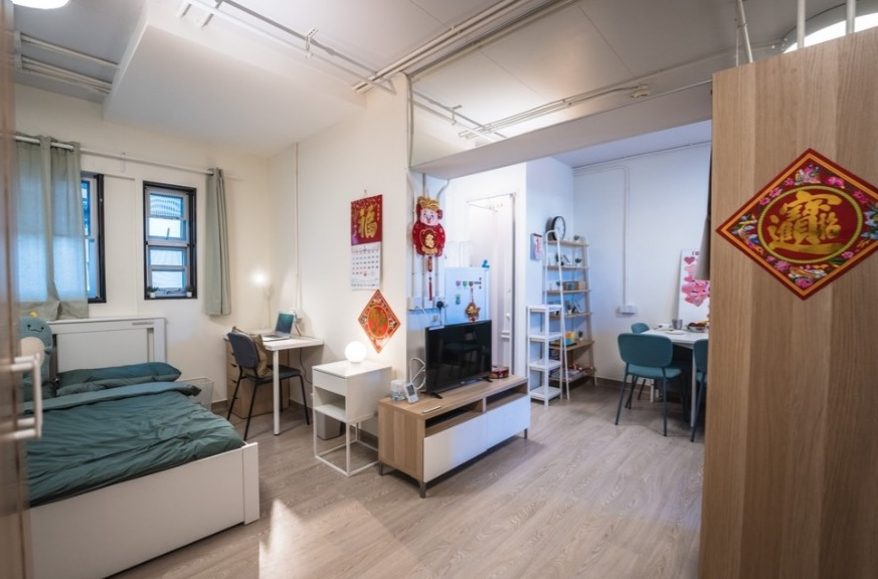
One of the prominent issues underlying the crisis is the sheer lack of supply to meet the demand of a growing population. One of the team’s proposed solutions to increase the housing supply and alleviate upward pressure on housing prices was for the government to focus on providing low-cost transitional housing for applicants awaiting proper public dormitories. This included ideas such as building container homes, making use of MIC technology, or renovating vacant schools.
On 19 October 2022, CE John Lee announced with his Policy Address, the Light Public Housing (LPH) scheme led by the newly inaugurated Housing Bureau, to promise 30,000 transitional housing units in the next five years. On 24 June 2024, the first batch of 4,400 LPH units opened for applications. He did stress that this was not intended to be the final solution, merely it would be a more humane option for applicants instead of relying on cage homes while they wait for public housing flats to be made available.
3. Unlocking Land
Hong Kong has long maintained the preservation of its natural reserves: only about 25% of the city’s land area is built up. With that in mind, it is not immediately clear how much new or existing land could be reallocated towards housing, possibly due to a lack of direction and/or coordination. For example, the Wang Chau area, home to multiple villages, was targeted for public housing development by the government in 2015. However, with villagers’ warranted protests over the years, the project did not progress, resulting in a significant waste of time and effort.
In 2021, in her Policy Address, the former CE Carrie Lam proposed the Northern Metropolis project located in the north of Hong Kong near the Shenzhen border. This aimed to develop under-utilised land into 30,000 hectares of city area and establish nearly a million new residential units. However, as expected of such a large project, this was projected to take nearly twenty years to complete. This was no real solution for the imminent crisis.
Through research, the team estimated nearly 4,500 hectares of under-utilised land in Hong Kong could be quickly converted into housing with minimal disruption. They proposed facilities such as short-term tenancy land currently used as single-level car parks, and vacant school premises, 191 locations in total, to be returned into the land pool to improve land supply.
Indeed, as of late 2023, with credit to views contributed by members of society, the Legislative Council Panel announced their intentions to convert five vacant schools in Kwun Tong, Wong Tai Sin and Sheung Shui into LPH flats with the conversion of other under-utilised brownfield lands in progress. We can applaud this effort but also recognise that it is only the tip of the iceberg in terms of solving the crisis.
4. Quality of Housing
As of 2017, there were no official government regulations on minimum standards for privately owned living spaces in Hong Kong, save for the Building Ordinance which details external building design and standards such as fire safety, structural safety, accessibility and such. Coupled with land and financial constraints, this gave rise to a system of subdivided flats, some rooms as small as 20 square feet – barely the size of a twin bed and smaller than a car parking space.
After conducting research on minimum housing space regulations in developed countries such as Germany, the U.S., Taiwan, and so on, the HKYLP team proposed that there must be a statutory minimum unit area for private residential housing, to be decided through consultation of various relevant stakeholders to be applicable for Hong Kong’s constraints. There also must be regulation for internal safety standards of these subdivided units, to ensure the ability of residents to evacuate in the possibility of an emergency.
In 2022, the Housing Bureau implemented a new Ordinance to regulate subdivided units, firstly through a financial lens by restricting the rate of rent increases and prohibiting landlords from overcharging for utility and service charges. Secondly, through dimensional standards such as enforcing minimum clear width of internal corridors, or minimum exit route heights of 2 metres.
In July 2024, Housing Minister Winnie Ho had suggested that the government will look towards enforcing minimum room areas of about 75 to 108 square feet, as well as minimum room heights where an average person should be able to stand upright, contrasting cage homes where residents are sometimes barely able to even sit upright on top of their beds.
However, 7 years ahead from the publication of the original HKYLP report, these proposed quality regulations are still insufficient, progress hampered by several constraints:
- Lawmakers remain fearful of threatening value propositions for landlords and risk them vacating their properties, leading to unmanaged buildings and falls in tax revenues
- Enforcing stricter minimum space requirements could also lead to a mass eviction of an already vulnerable group of residents
Conclusion
All factors considered, the team at GIFT is pleased to see the government taking action on the long-overdue lack of affordable housing even if holistic change is still yet to happen. While the HKYLP recommendations were among many calls across society for housing reform, this report was uniquely produced by a cross-section of talented young leaders who have had first-hand experience with the problem. We are proud that their analysis was well-targeted, reinforcing our long-held belief in the power and effectiveness of the GIFT methodology. Grounded in frontline insights and real-world realities, the programme inspired the cohort to create, within a week, a report that other teams may take months or years to produce.
This is a call to action for policymakers, institutions, and citizens alike to continue fostering innovative solutions and contributing to a more informed and proactive approach to governance.
Please click here to read the full report of the HKLYP in 2017, and here for the executive summary.
References:
- 2017 Hong Kong Young Leaders Programme – Housing Affordability for the Next Generation: Accessible Approaches and Recommendations. The Global Institute For Tomorrow (GIFT). https://global-inst.com/wp-content/uploads/2021/03/GIFT_Housing_Affordability_HongKong2017.pdf
- 2017 Hong Kong Young Leaders Programme – Housing Affordability for the Next Generation: Accessible Approaches and Recommendations (Executive Summary). The Global Institute For Tomorrow (GIFT). https://global-inst.com/wp-content/uploads/2021/03/GIFT_Housing_Affordability_HongKong2017_ExecSummary.pdf
- Buildings Department. What You Must Know about Subdivision of a Flat. https://www.bd.gov.hk/doc/en/resources/pamphlets-and-videos/SDFe.pdf
- Chau, C. (2022, October 19). Hong Kong Policy Address: John Lee vows 30,000 new public housing units to boost supply by 25% in 5 years. Hong Kong Free Press HKFP. https://hongkongfp.com/2022/10/19/hong-kong-policy-address-john-lee-vows-30000-new-public-housing-units-to-boost-supply-by-25-in-5-years/
- Lee, J. (2023, December 12). 5 Hong Kong schools proposed as sites under gov’t transitional housing scheme. Hong Kong Free Press HKFP. https://hongkongfp.com/2023/12/12/5-hong-kong-schools-proposed-as-sites-under-govt-transitional-housing-scheme/
- Legislative Council Panel on Light Public Housing (LC Paper No. CB(1)1123/2023(02)). (2023). Legislative Council of the Hong Kong S.A.R. https://www.legco.gov.hk/yr2023/english/panels/hg/papers/hg20231215cb1-1123-2-e.pdf
- Lin, E. (2024, July 29). EXCLUSIVE: Hong Kong subdivided flats to be regulated in phases, higher-risk homes priority: official. South China Morning Post.https://www.scmp.com/news/hong-kong/society/article/3272182/hong-kongs-subdivided-flats-be-regulated-phases-higher-risk-homes-priority-housing-chief-says
- Low, Z. (2020, July 29). Angry villagers in Hong Kong’s New Territories set up roadblocks, refuse to make way for Wang Chau housing project. South China Morning Post. https://www.scmp.com/news/hong-kong/society/article/3095222/angry-villagers-hong-kongs-new-territories-set-roadblocks
- The Standard. (2024, June 24). First batch of light public housing opens for applications. The Standard. https://www.thestandard.com.hk/breaking-news/section/4/217730/First-batch-of- light-public-housing-opens-for-applications

Najmi was a Programme Associate at GIFT Hong Kong, where he contributed towards programme management, conducts market research, and supports in client outreach and marketing.