
Nearly half of humanity does not have access to secure and adequate housing, according to UN-Habitat’s 2026 World Cities Report. There is currently a global shortage of 288 million housing units, with over 1.1 billion people living in informal settlements and slums, and 133 million people displaced worldwide as of 2024.
Jakarta offers a stark window into Asia’s housing dilemma. As Indonesia’s economic centre, it attracts millions in search of opportunity. According to the Indonesia Statistics Agency (BPS), the city’s working population reached 5.11 million people as of August 2024, with over 3 million people commuting daily from surrounding areas into central Jakarta. An average person in Jakarta spends 400 hours per year commuting, time that could be invested in productivity or quality of life.
Land availability and affordability are the primary constraints. High land prices in central Jakarta, combined with limited development-ready plots, make it financially challenging for developers to build housing at price points that low- and middle-income households can afford. Consequently, affordable housing is typically developed in peripheral areas where land is cheaper but farther from employment centres.
Insights on the ground
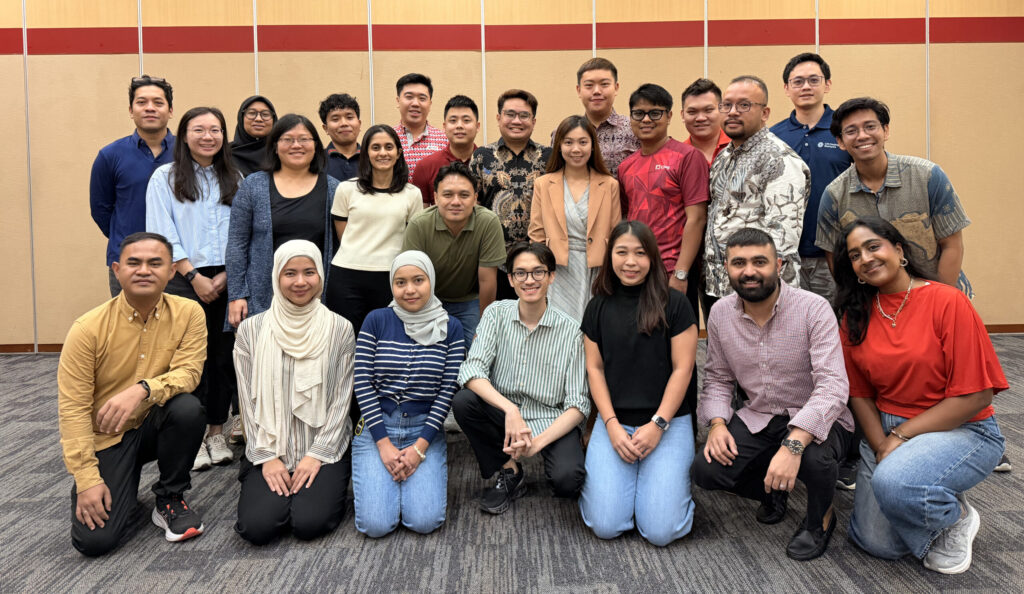
In May 2026, GIFT took a group of emerging leaders from a regional bank and travelled to Jakarta with a simple but urgent question: can the private sector play a meaningful role in solving affordable housing, one of the most pressing challenges of our time?
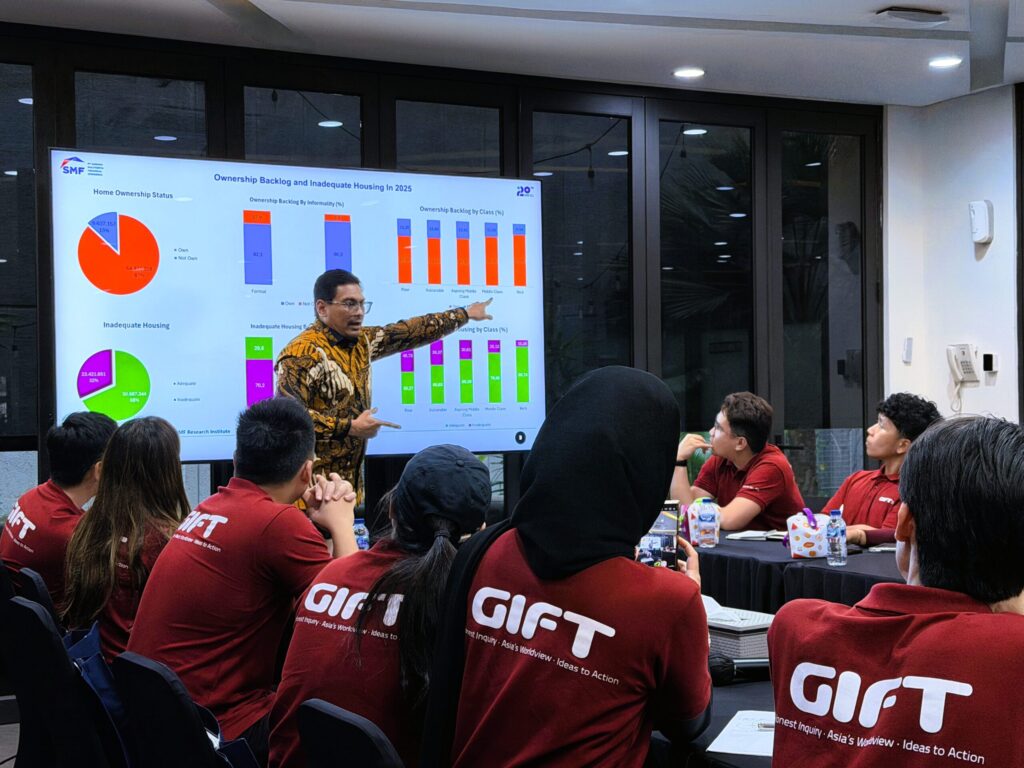
Over five days, they met with government officials, developers, financial institutions, civil society organisations and communities on the ground. Through these conversations, they gained several insights that are not readily apparent:
1. Indonesia’s property system:
The country’s law allows individuals to own land outright, but apartment buyers do not own the land their homes sit on. Instead, they purchase time-bound rights, typically lasting up to 80 years. These leases do not reset upon resale, meaning each subsequent buyer inherits the remaining term. When the lease expires, ownership reverts to the state. This structure complicates long-term financing and reduces the attractiveness of high-density housing, precisely the type cities need to scale affordability.
2. The informal economy:
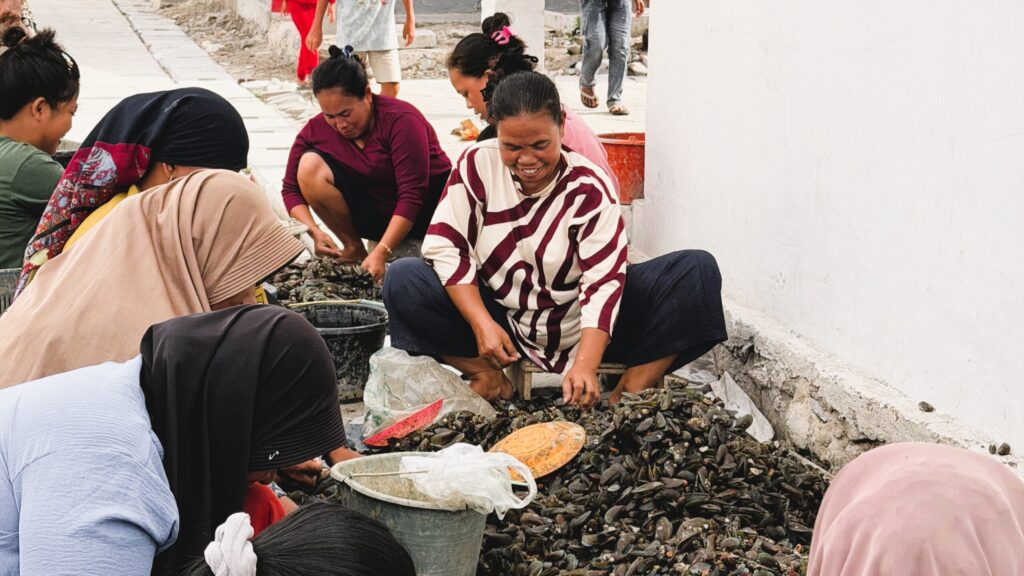
Approximately 60% of the national workforce operates outside formal employment structures, relying on small businesses, gig work, daily wages, or multiple income streams. In Jakarta alone, this figure is at least 36%. Even when these workers generate consistent cash flows and demonstrate repayment capacity, their incomes are often irregular, undocumented, and difficult to verify through conventional financial metrics. As a result, financially capable individuals are excluded, not because they cannot pay, but because they cannot prove it.
3. Group microfinancing as a model:
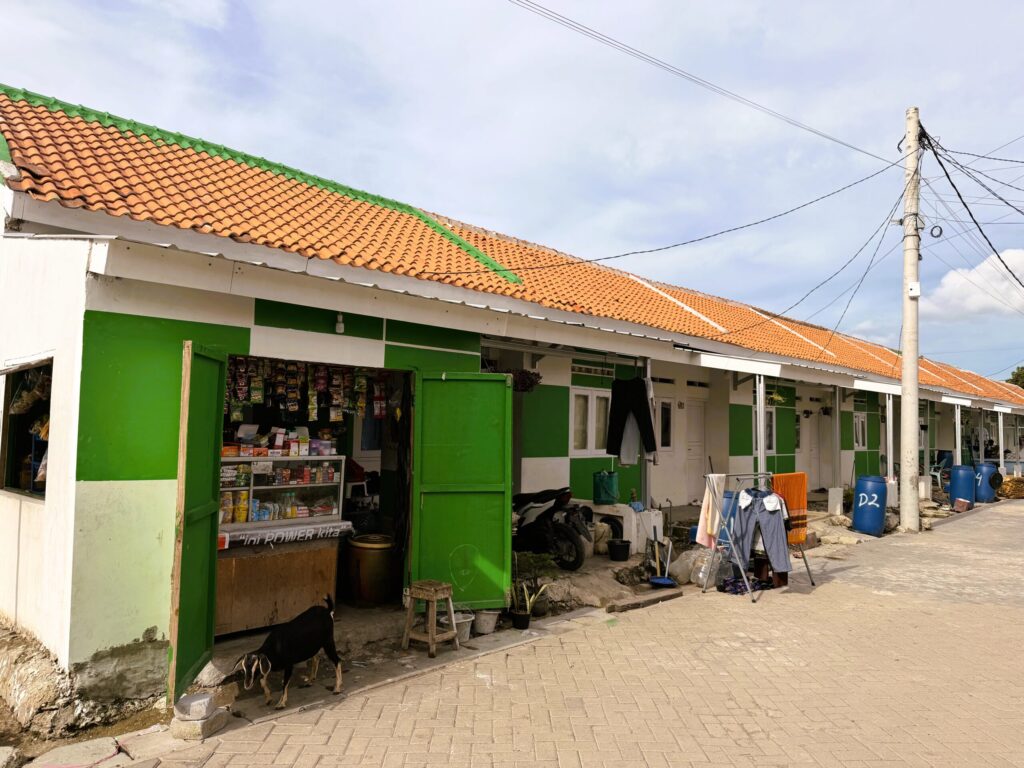
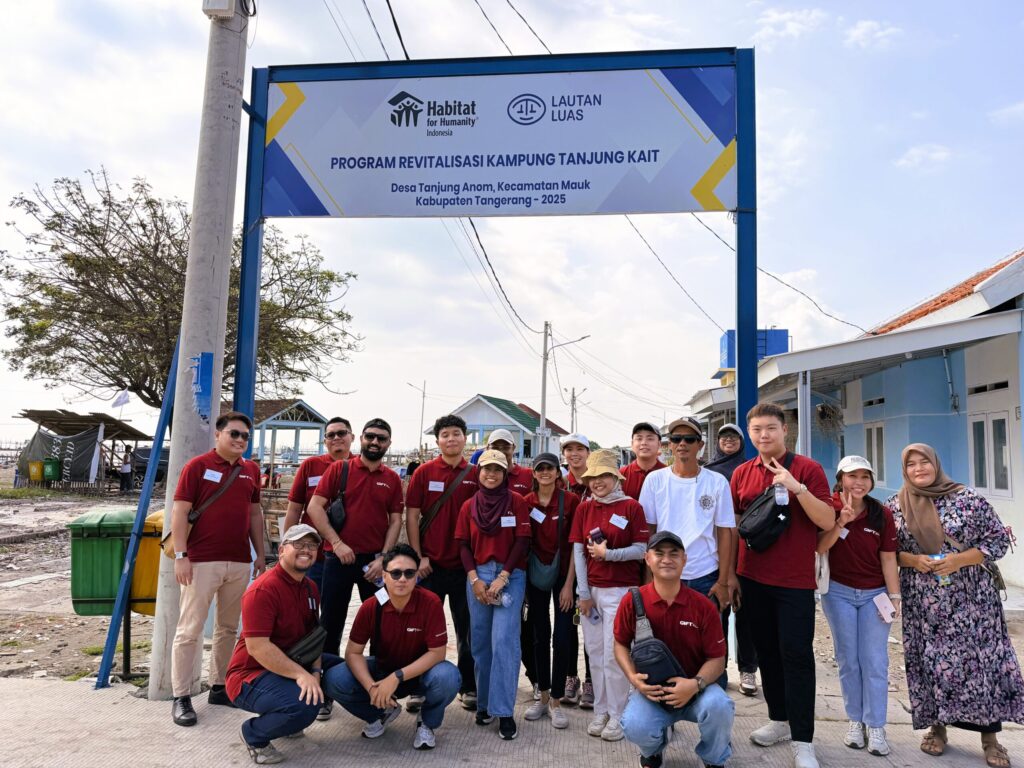
In Tanjung Kait, a coastal community previously classified as a slum and vulnerable to sea-level rise and flooding, participants observed how Habitat for Humanity partnered with residents to build basic housing infrastructure. As part of the process, residents must purchase the land beneath their homes. A partnership with the microfinance organisation KOMIDA enables this by providing loans to groups of 13–15 members who commit to weekly repayments. Within these groups, members hold one another accountable and act as a collective safety net.
Building on these insights, participants began developing integrated solutions, including innovative financing products, public-private partnerships, and policy recommendations. They propose collaborating with microfinance institutions like KOMIDA to expand group financing for lower-income segments, alongside policy recommendations on land use and urban planning, particularly around transit-oriented development (TOD). After all, no financial innovation can compensate for housing that is priced out of reach.
In addition, participants are revising and developing new credit underwriting criteria that consider monthly cash flow, bill payment consistency, digital records, and referrals from existing borrowers, associations, or employers. If implemented, these innovations could unlock access to financing for informal workers, not just for housing, but across a broader range of financial products. Over time, this could contribute to upward social mobility for a large segment of the population.
Rethinking the role of businesses:
For many financial institutions, serving higher-income, formally employed customers is simpler, more predictable, and aligned with existing performance metrics. Expanding into informal-economy lending requires new capabilities, higher upfront costs, and tolerance for uncertainty. But continuing along this path will only deepen the divide. What feels safe in the short term is increasingly risky in the long term.
The path forward demands a fundamental reorientation: shifting from short-term, KPI-driven performance to long-term, sustainable value creation. Financial institutions must move from viewing informal-economy workers as high-risk to recognising them as underserved markets with real potential.
Housing Development Finance Corporation (HDFC) in India serves as an inspiring example in the region. Like Indonesia, a large share of India’s workforce operates in the informal economy, with incomes that are often cash-based, variable, and poorly documented. HDFC hence takes a contextual approach to credit assessment. Rather than relying solely on standardised documentation, it conducts detailed field verification, including residence and workplace checks, income assessments, and property valuation, to understand each borrower’s real repayment capacity.
This approach has proven both commercially viable and socially impactful. By expanding access to housing finance beyond formally employed borrowers, HDFC has built a large and profitable lending portfolio while enabling millions of lower- and middle-income households to access home ownership. It demonstrates that serving underserved segments is not just a social good, but a sustainable business model when approached with the right tools and mindset.
Businesses can and must support national development priorities, but this requires a different kind of leadership, one grounded in systems thinking, stakeholder engagement, and genuine collaboration. These are not skills that can be taught in classrooms or acquired from reports. They must be learned by doing, by stepping into complex ecosystems, engaging across divides, listening to multiple truths, and grappling with trade-offs in real time. Experiential learning projects like this one are not luxuries. They are essential infrastructure for developing the leaders who can navigate and solve the adaptive challenges of our time.

Pearly is a Senior Programme Manager at GIFT ASEAN, where she designs and delivers experiential leadership programmes. She has over a decade of experience facilitating learning for professionals and young people across international contexts, including work with policymakers in Nepal, entrepreneurs in Cameroon, and county officials in North‑East Wisconsin.