
Malaysia has carefully cultivated an image as a tropical nation of lush forests and environmental consciousness. We are custodians of some of the world’s most biodiverse ecosystems. We lecture the developed world about historical responsibility and demand climate finance from wealthier nations.
Within weeks, that image meets the test of law. The National Climate Change Bill (RUUPIN) is expected to be tabled in Parliament soon. The law could establish binding sectoral emissions targets, mandatory carbon accounting, and enforcement mechanisms. It is necessary. The strength of the law will reveal whether the image reflects genuine commitment or mere positioning.
Because behind the image lies an uncomfortable truth: Malaysia now emits just over eight tonnes of carbon dioxide per person a year, among the highest rates in the Association of Southeast Asian Nations (Asean) and roughly double the global average of about 4.7 tonnes. This is not simply a result of our status as an oil producer but reflects the country’s structural choices: a transportation system built around private cars rather than mass transit, an economy powered predominantly by fossil fuels, and a development model that has prioritised industrial output over carbon restraint.
Yet when Malaysia ascends the podium at COP summits, we invoke the principle of differentiated responsibilities, arguing that developed nations caused historical emissions and must pay for decarbonisation. The historical argument is real: warming is driven by cumulative emissions, and on that ledger the West still owes. For genuinely poor nations, this argument has full force. For Malaysia, the world’s sixth-largest semiconductor exporter, a major palm oil producer, and a growing AI hub, the exemption weakens every year we industrialise.
The contradiction is already visible in our commitments. Malaysia’s October 2025 Nationally Determined Contribution 3.0 commits to peaking emissions between 2029 and 2034, with 2030 as the stated goal, and cutting 15 to 30 million tonnes of CO2 equivalent by 2035. These are modest, but real targets. Yet simultaneously, the government continues approving upstream oil and gas exploration, has only begun rationalising the fuel subsidies that make driving cheaper than public transit, and allows electricity prices to remain artificially low.
We preach net zero by 2050 while acting like a nation betting on fossil fuels through 2035.
And just as RUUPIN nears the floor of the Dewan Rakyat, signs of retreat have emerged. In April, Natural Resources and Environmental Sustainability Minister Arthur Joseph Kurup announced that the carbon tax promised in Budget 2026 for the iron, steel and energy sectors was on hold, citing geopolitical tensions in the Middle East and the need to avoid burdening industries and the rakyat.
Understanding why Malaysia stumbles at the threshold of climate action requires acknowledging three interlocking barriers.
The first is political. Removing fuel subsidies or raising electricity tariffs to reflect true costs would trigger immediate public backlash. Fuel is a touchstone issue in Malaysian politics, and no government wants to commit political suicide. Yet this same political caution means Malaysia may never break its addiction to cheap carbon-intensive energy.
The third is constitutional. Climate policy sits uneasily between federal and state authority. The federal government commits to international emissions targets, but states collect revenue from logging, land clearing, and mining. Asking states to decarbonise is asking them to give up that revenue without clear compensation.
The critical moment arrives when RUUPIN is tabled. Parliament faces a choice: pass a climate law with binding sectoral targets and punitive enforcement, or pass a framework so flexible it amounts to policy theatre.
Malaysia needs a climate law that treats emissions reduction as non-negotiable, with sectoral targets backed by legal force. And each barrier above has an answer, if the government wants one. The political barrier can be overcome by returning carbon tax revenue to households and public transit. The constitutional barrier is answered by a compensation formula that pays states to keep forests standing.
The government must signal clearly that the era of fossil fuel dominance is ending and that restructuring must begin immediately, follow a defined timeline, and proceed in tandem with the gradual phase-out of fuel subsidies alongside the expansion of public transit. When it comes, the carbon tax should be presented for what it is: the cost of remaining competitive in a carbon-constrained world.
Achieving this requires a fundamental shift in mindset: decarbonisation is not a Western penalty imposed on developing nations — it is a strategy for economic survival. The European Union’s Carbon Border Adjustment Mechanism (CBAM) takes effect in 2026. Malaysian exporters of steel, aluminium, cement, and related goods will face direct carbon costs at the border. By delaying a domestic carbon tax, Malaysia offers industries short‑term relief while exposing them to long‑term disruption.
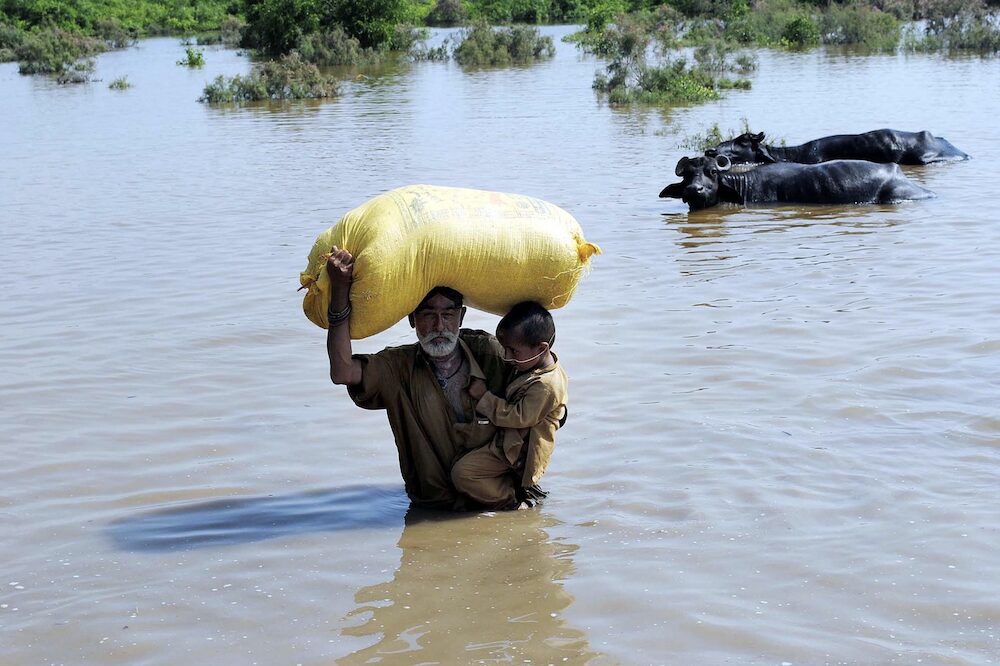
Climate action is also self-protection. In Malaysia, climate-related impacts could reduce GDP by up to 8.3 per cent by 2050, with extreme scenarios pushing losses beyond 20 per cent in a single year due to floods and heatwaves. Even today, climate-linked health impacts alone are estimated to cost over 22,500 premature deaths linked to air pollution from fossil fuels. These figures underscore that delaying action is not cost-free. It shifts far greater economic burdens into the future.
The gap between Malaysia’s emissions profile and its diplomatic positioning will not resolve itself. It will either be narrowed through deliberate policy or widened through continued inaction.
When RUUPIN is finally tabled, Malaysia will face a defining question: will we finally confront our reality, or continue defending a position our own emissions no longer justify?

Pearly is a Senior Programme Manager at GIFT ASEAN, where she designs and delivers experiential leadership programmes. She has over a decade of experience facilitating learning for professionals and young people across international contexts, including work with policymakers in Nepal, entrepreneurs in Cameroon, and county officials in North‑East Wisconsin.