Earlier this year, a United Nations University report warned that the world has entered an era of “water bankruptcy”, a condition in which long-term water use exceeds renewable supply, causing effectively irreversible degradation. This is a wake-up call: environmental add-ons to business-as-usual over the past decades have failed to improve resource conditions and, in many cases, have made them worse.
Economics does not exist outside ecology. It exists within it.
All economic activity depends on the living systems that quietly sustain it.
Water does not come from pipes alone, but from catchments, soils, forests, and wetlands that regulate water flow.
Energy depends on landscapes.
Rivers, wind patterns, minerals, and thermal conditions that shape how power is generated and used.
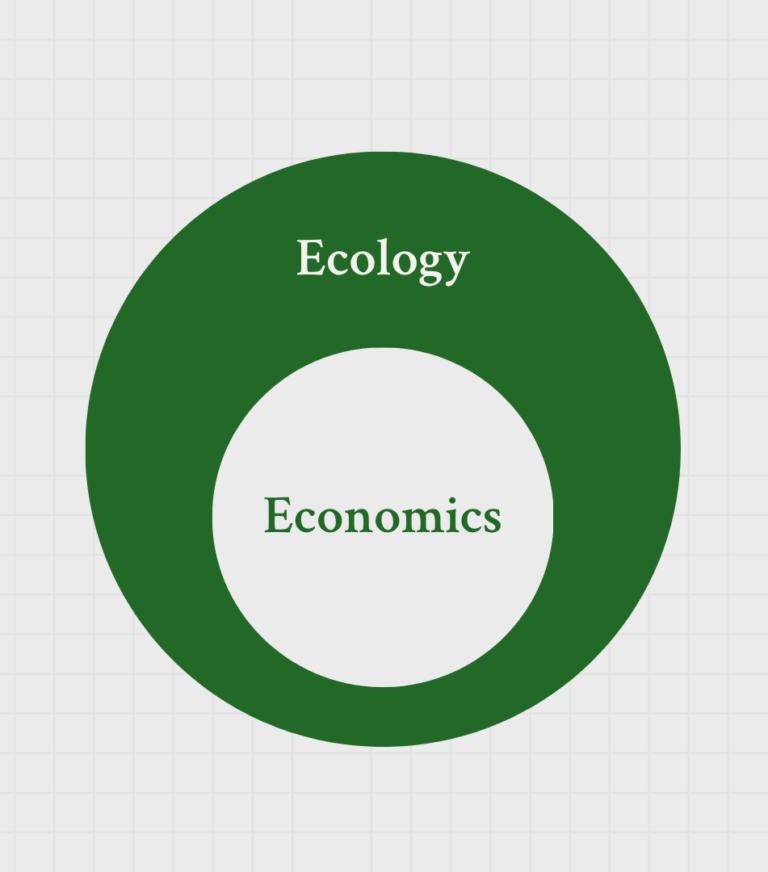
Under the industrial extractive paradigm, a persistent myth in business thinking is that nature is external, relevant only when it can be extracted or monetised. Even the language of “sustainable development,” with its three “pillars” of economic, social, and environmental priorities, reinforces this divide. It suggests that the economy can stand apart from nature, and that environmental considerations are additional, rather than foundational.
If businesses, and humanity, are to endure, we must confront a simple reality: prioritising economic growth whilst degrading ecosystems is eroding the very ground we stand on. The Chinese proverb, 拔苗助长, pulling up seedlings to make them grow, captures this well. In our pursuit of growth, we destroy the very thing we depend on.
Nature as invisible infrastructure
Businesses intuitively understand infrastructure. Firms pay to build and maintain roads, ports, power grids, and digital networks. Ecosystems perform a similar role, often more efficiently and at far lower cost. Forests and wetlands regulate water, reducing floods and ensuring reliable supply. Plants and soils filter pollutants that harm health and productivity. Healthy ecosystems stabilise local climates and reduce risks that disrupt operations and logistics.
These services are unnoticed when they function well, but their absence is immediate: production stoppages, damaged assets, supply interruptions, and rising uncertainty. Ecosystems form basic infrastructure, underpinning economic life long before formal systems intervene. Yet businesses neither budget for ecosystem maintenance nor treat its degradation as a core risk.
Production depends on regeneration
In sectors such as agriculture, fisheries, and forestry, this dependence is explicit because production relies directly on soil health, water cycles, and ecosystem stability.
Maintaining productive capacity is a core business discipline, machinery is serviced, staff are trained, and supply chains are secured. Yet natural systems, which underpin these activities, are often depleted faster than they are restored.
Agriculture illustrates the imbalance. Practices such as cover cropping, reduced tillage, and crop diversification are not environmental add-ons. They restore soil fertility, the productive base itself. Yet much of modern agriculture remains reliant on input-intensive monocultures that degrade soil over time, raising costs and increasing vulnerability to climate shocks.
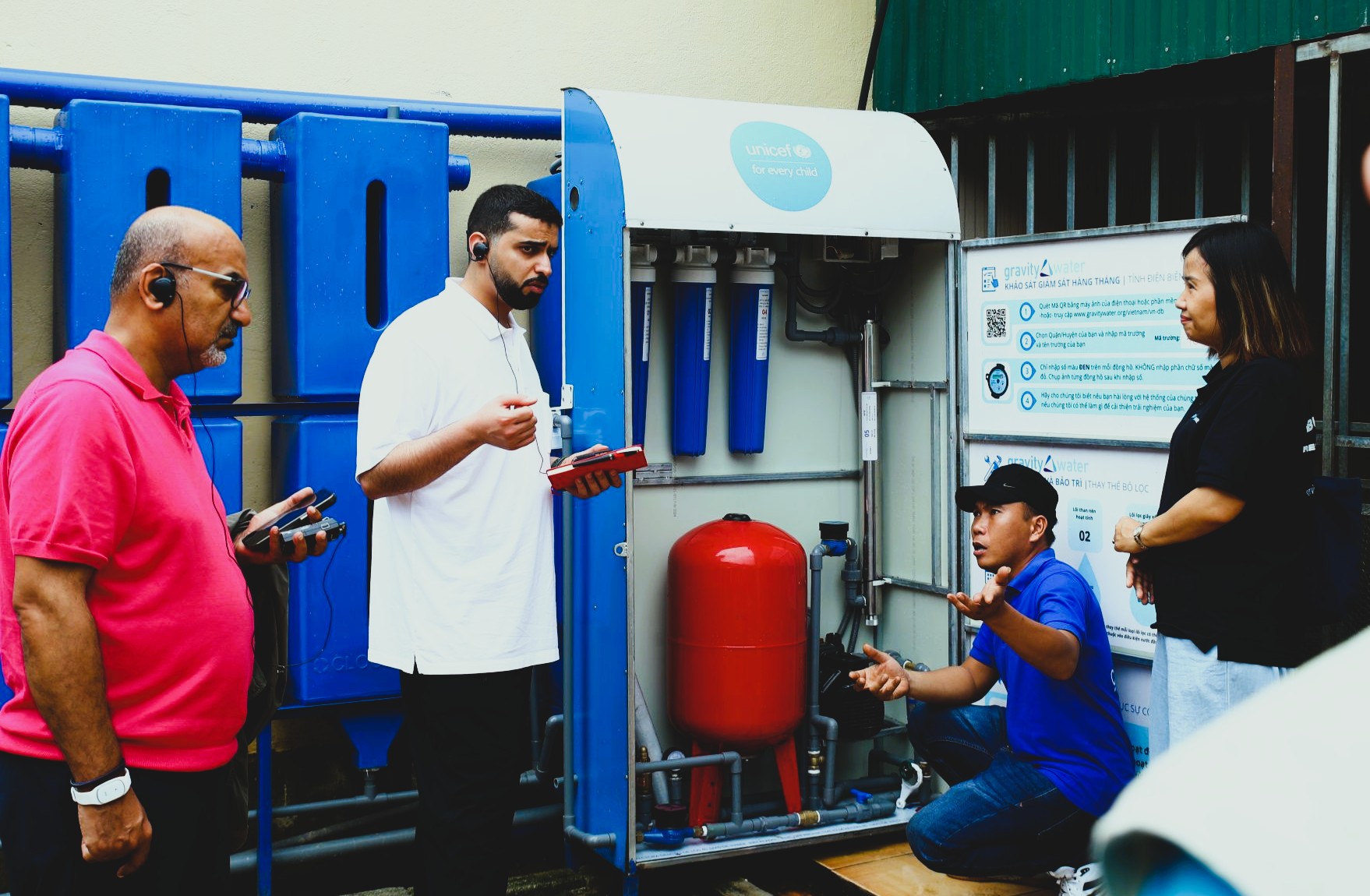
Water-dependent industries face a similar dynamic. Factory-level efficiency gains do little when surrounding watersheds are overdrawn. In response, some companies are now investing beyond their fence lines, restoring wetlands, supporting upstream land management, and protecting recharge zones, not as philanthropy, but to secure long-term operations.
Ecosystem maintenance, in this context, is not corporate social responsibility. It is operational risk management.
Cultural values and economic life
Beyond material inputs, ecosystems also shape the experiences many industries are built around. Tourism, hospitality, food, and leisure depend directly on landscapes that offer scenery, character, and a sense of place, coastlines, rivers, farms, and fisheries that define destinations and cuisines. In doing so, businesses engage in placemaking, shaping these environments to create meaning, identity, and value.
More broadly, economic activity itself is shaped by environmental quality. People are more likely to work, stay, and invest in places that feel liveable and distinctive rather than degraded. When ecosystems decline, what is lost is not only biodiversity, but the qualities that make places economically attractive.
Beyond regulation and offsets
Most corporate responses to environmental challenges have been framed around compliance, reporting, or offsets. While necessary, these measures often remain peripheral, treated as obligations rather than strategic priorities.
A more practical starting point is to recognise that every business is embedded in specific ecosystems. Water may appear as a cost line, but it is experienced locally, within a watershed. Raw materials are traded globally but extracted from landscapes with limits. This perspective shifts attention from global slogans to local conditions. Businesses can ask practical questions they already know how to answer:
- What ecological systems does this business depend on?
- What are the financial risks if those systems degrade?
- What would it cost to maintain or restore them?
Some firms will invest directly in restoration; others will co-invest with governments, suppliers, or communities; still others will redesign production to reduce extraction pressure.
A well-established example is Elion Group that embeds ecosystem restoration into its business strategy. Operating in China’s Kubuqi Desert, the company restores degraded land by planting drought-resistant vegetation, stabilising sand, and rebuilding soil systems, while integrating these efforts with commercial activities such as solar energy, agriculture, medicinal plants, and ecotourism. Rather than treating restoration as a separate CSR effort, Elion works with governments and local communities to turn ecological recovery into an ongoing economic system.
Another example is Olam Group, a Singapore-headquartered global agribusiness. As a major cocoa and coffee trader, Olam relies on healthy forest ecosystems to sustain rainfall, soil fertility, and long-term yields. Through its Living Landscapes approach, the company focuses on restoring degraded forest areas and reintegrating trees into agricultural landscapes via large-scale agroforestry. This includes supporting smallholders to transition from full-sun monocropping to shade-grown systems.
The bottom line
In any serious business, maintaining what makes production possible is non-negotiable. This is not a departure from economic thinking. It is a return to a more complete one, where ecosystems are recognised not as externalities to be managed, but as the foundations of production, labour, and exchange itself.
To act on these, business leaders need to shift their mindsets and develop systems thinking that help them see how their businesses are affected by interconnected and evolving factors, including the environment. This is especially critical when leading a business facing existential uncertainty.
Businesses need reinvention leaders, who are willing to confront uncomfortable truths and re-examine everything, from strategy and markets to the business model itself.

Pearly is a Senior Programme Manager at GIFT ASEAN, where she designs and delivers experiential leadership programmes. She has over a decade of experience facilitating learning for professionals and young people across international contexts, including work with policymakers in Nepal, entrepreneurs in Cameroon, and county officials in North‑East Wisconsin.