
The Global Institute For Tomorrow (GIFT) recently convened the virtual conference, Conflict in the Middle East: Redrawing the World Energy Map and China’s Role, on 27 August 2026 to examine this highly topical question with political analysts, energy specialists, economists, and geopolitical thought leaders from across Asia, the Middle East, Europe, and Africa.
The discussion moved far beyond headline oil prices and disruptions in the Strait of Hormuz. Instead, it explored a broader transformation across energy security, technological leadership, development, and geopolitical power, and considered what China’s growing role in this shift could mean for the emerging multipolar world order.
These were the key takeaways:
1. The Middle Eastern conflict has accelerated a historic consolidation among Iran’s elites, pushing them further away from the West.
Opening keynote Prof. Mohammad Marandi (former advisor to Iran’s nuclear negotiation team and a prominent international media commentator on Tehran’s political and strategic positions) offered a direct, on-the-ground perspective from Iran on the conflict. He argued that after years of “maximum pressure”, Iran sees the current moment as an opportunity to challenge the sanctions regime and pursue greater economic freedom. Notably, the conflict has catalysed many liberal elites to depart from their traditionally Western orientation. Where these Iranian elites were historically divided, they have now become more united in their tilt towards the East and the Global South, stressing the importance of Iran’s strengthening relationship with China and its declining relationship with a Europe seen as still “sacrificing itself to the US.”

2. The clean-energy transition is not a panacea for energy-security risks – it redirects them.
Prof. Kevin Tu (Chief Advisor on China, Agora Energiewende) offered an important corrective to the popular assumption that moving away from fossil fuels in response to the conflict in the Middle East will automatically reduce geopolitical vulnerability. Previously, the energy map was based upon where fuels were located and how they were transported; the emerging energy map will instead be shaped by electricity grids, storage, critical minerals, technologies, manufacturing capacity, and supply chains. Electrification can reduce dependence on imported oil, but can also create new dependencies elsewhere. Prof. Tu argued that a more effective strategy is “optionality,” in which a resilient energy system comes from having multiple technologies, routes, and sources available when one fails. The importance of diversification was also raised by Dr. Naji Abi-Aad (COO of Petroleb and Senior Advisor on Energy Studies at the Gulf Research Center), who highlighted that the Middle East has several international pipelines, but none are currently operational. This is a question of both infrastructure and the relationship between producing and transit countries. Dr. Abi-Aad suggested that changing this would require a new form of regional energy charter in which all countries benefit from cross-border energy flows. Pipeline infrastructure raises the possibility of treating energy connectivity as a mechanism for regional cooperation and, potentially, peace.
3. China’s technological rise will give it increasing influence over the world’s future energy economy.
At the heart of the discussions was China’s rapidly evolving technological and industrial position. Alex Krainer (market analyst in commodities and geopolitical economics) highlighted the remarkable speed of this shift, describing a “spectacular inversion” in technological leadership over less than two decades, with China now holding major advantages across critical technologies, including those involved in producing, storing, and using energy. Jeremy Bentham (Chair on Scenarios, World Energy Council) took this observation a step further, suggesting that China’s enormous domestic market, manufacturing expertise, and growing AI enable it to work with other major economies to establish emissions and industrial standards. China is producing many of the technologies foundational to the future energy system and is also helping shape the standards and terms through which that system operates.

4. Decision-making is not binary – the Global South can choose both China and the West.
Dr. Fithra Faisal Hastiadi’s (Expert Staff / Spokesperson, Government Communication Agency, Indonesia) discussion of Indonesia provided a fascinating alternative to the binary language of geopolitical blocs. Rather than choosing one over the other, he described a strategy of “dual compliance.” This means retaining Chinese capital, partnerships, and processing technologies, while also developing supply chains capable of meeting US, EU, and OECD standards. The objective is diversification rather than alignment, with the suggestion that no single partner should control more than roughly half of a critical node. This points towards a potentially defining characteristic of multipolarity, in which countries exercise greater agency by combining competing systems rather than joining just one.
5. China’s so-called “overcapacity” could be a boon from the vantage point of the developing world.
Discussions challenged the mainstream framing of Chinese clean-tech production as a problem of “overcapacity”. Prof. Christine Loh (Chief Development Strategist, Hong Kong University of Science and Technology) noted that China is able to manufacture much of what is required for the energy transition at enormous scale and at comparatively low cost, while Prof. Busani Ngcaweni (Director of the Centre of Public Policy and African Studies, Johannesburg Business School) highlighted that African economies are actively taking advantage of the growing availability of accessible and cheaper technologies. As moderator Brian Rhoads (Editor of SCMP Plus, South China Morning Post) put it, “one man’s overcapacity is another man’s very inexpensive, but high-quality vehicle.” This idea raises the question: if the world urgently needs vastly more renewable technology, should “overcapacity” be reframed as the industrial capacity required to enable a global transition that is more accessible and affordable?
6. Geopolitical structures centred on the petrodollar are being challenged by the rise of green technology.
Daniel Levy (political commentator; President, U.S./Middle East Project, USMEP) raised the question of how systems built upon American power that are intertwined with oil, cheap energy, and the international role of the dollar are affected by the shift towards systems organised around batteries, critical minerals, electric vehicles, renewable electricity, and associated technologies. China possesses major advantages in these sectors. The transition in energy could carry significant implications for financial and geopolitical power as well. Rather than treating decarbonisation as simply an environmental transformation, the discussion touched on a systemic geopolitical dimension.
7. Transcending the “world’s factory” moniker, China’s most important future role may be as a “systems builder” on the global stage
Prof. Christine Loh offered a compelling reflection on the day’s discussions when she described China as one of the world’s most capable systems builders, observing that its role extends beyond supplying individual technologies to integrating financing, infrastructure, manufacturing capacity, grids, industrial policy, and development experience. China itself is still standing up to this challenge. It has enormous renewable-generation capacity, yet must continue developing the grid, pricing mechanisms, and transmission systems required to use that capacity fully. This broad and unique experience is particularly relevant for developing economies undergoing the same transition. The opportunity, Prof. Loh suggested, is not to buy Chinese technologies but to learn alongside China as these systems are built.
These panel discussions suggested that the emerging energy map is about more than shifting oil flows; it reflects a deeper transformation in technologies, standards, supply chains, diplomatic relationships, and models of development. China occupies a unique position as both a stakeholder in the existing system and a nation with the industrial and technological capacity to shape the future. The question now is not just whether China will dominate a new energy order, but whether this transformation is creating a more multipolar system in which hegemony itself becomes harder to sustain.

This virtual conference was the first of the three-part series, “Vanishing Red Lines: China and the Reordering of Global Power.”
Sincere thanks to all the distinguished speakers and moderators for their invaluable contributions: Prof. Mohammad Marandi, Prof. Kevin Tu, Dr. Naji Abi-Aad, Mr. Daniel Levy, Mr. Alex Krainer, Prof. Christine Loh, Dr. Fithra Faisal Hastiadi, Mr. Jeremy Bentham, Prof. Busani Ngcaweni, Mr. Brian Rhoads, and Mr. Chandran Nair.
Special thanks to the Global Dialogue Partners, China Hong Kong Culture Exchange Association, Decolonial International Network (DIN), EU Guanxi, Institute of Peace and Diplomatic Studies (IPDS), The Geostrata, and WAOSD, for fostering global awareness and balanced discourse.
For more details of the conference series and upcoming events, visit: Vanishing Red Lines: “China and the Reordering of Global Power” Series
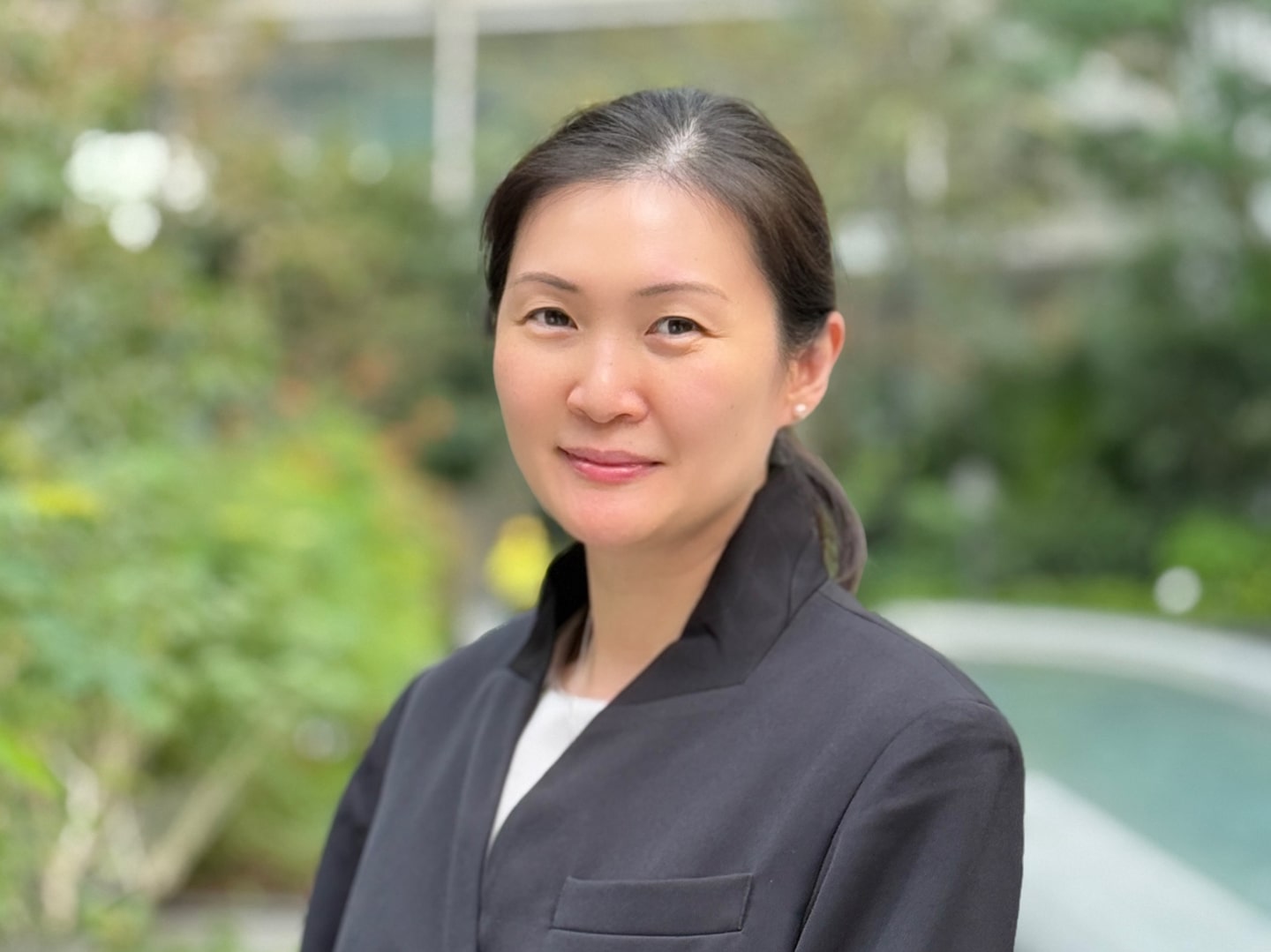
Renée Chu is the Head of Programmes and Content at GIFT HK, where she oversees the Programme Management team and content creation. Her interests include business management, organisational culture, and female advocacy.