
In 2022, Europe experienced prolonged heatwaves and recorded its second warmest year in history. The California wildfires in 2023 – with burned areas five times larger than 50 years ago – dominated global headlines again when New York choked in its apocalyptic, yellow smog. These climate threats remind us of our failure to stop the climate crisis and call for more urgent action.
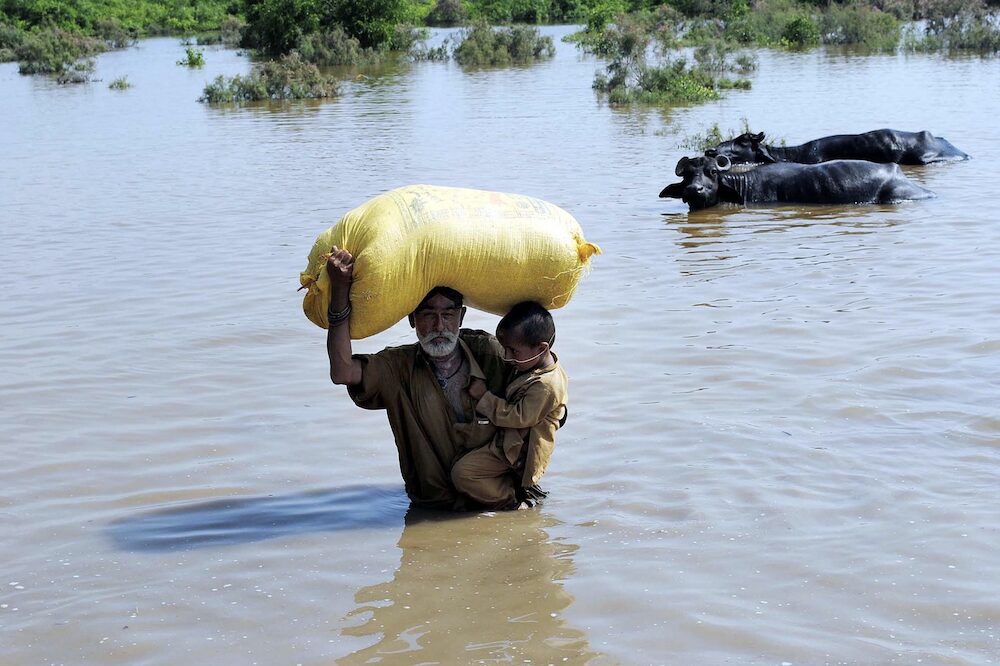
Also in 2022, the Horn of Africa enters the third year of its worst drought on record, destroying crops and livelihoods and pushing communities to the brink of starvation. Meanwhile, catastrophic floods paved desolation across 19 countries in West Africa and plunged one-third of Pakistan underwater. These deadly crises, on the other hand, merely evoke a fleeting emotion of pity toward what many perceive as an immutable norm of the impoverished ‘others’.
The juxtaposition of climate-related disasters in different regions – in the rich and poor worlds – reveals a troubling reality: climate change is disproportionately impacting low-income countries, who are being forced to prepare for the brunt of climate change on their own.
The Real Costs of Climate Change
As a whole, climate-induced natural disasters have become more frequent, more destructive, and more costly. During the past 20 years, the reported direct global economic losses from climate-related disasters – which account for 91% of all disasters – is almost US$2.3 trillion. This is 2.5 times more than the total cost two decades before.
Yet, while Western economies contribute to more than 90% of the carbon emissions driving climate breakdown, those suffering the worst impacts are developing countries, who contribute little to the problem. The top 20 most vulnerable countries on the International Rescue Committee’s 2023 Emergency Watchlist – which include drought-hit Somalia and flood-hit Pakistan – contribute only 2% of the global greenhouse gas (GHG) emissions. Over 90% of deaths caused by natural disasters occur in low-income countries due to the lack of climate resilient infrastructure, pre-existing vulnerabilities, political instability, and the absence of adequate disaster recovery resources.
Although climate action is increasingly top of mind, the current financial flows are not nearly enough. According to COP27 Sharm el-Sheikh Implementation Plan, the global transition to low-carbon economy is expected to require US$4 to $6 trillion a year. The 2021 global climate finance flows are estimated to be a mere US$850 to US$940 billion, falling short by a large margin.
“
Over 90% of deaths caused by natural disasters occur in low-income countries due to the lack of climate resilient infrastructure, pre-existing vulnerabilities, political instability, and the absence of adequate disaster recovery resources.
The Unbalanced State of Global Climate Finance
Low-income countries – the ones most impacted by climate change – are systematically excluded from accessing the already-limited funds for climate action.
To begin with, global climate finance is extremely unbalanced. In 2021, adaptation finance – funding to reduce global vulnerabilities to the effects of climate change – accounted for only 7% of the total share of climate finance. Meanwhile, mitigation finance – funding to reduce emissions of GHG into the atmosphere – accounted for over 90%. Dual uses accounted for the remaining 2%. While the importance of mitigation cannot be understated, a more balanced distribution is needed given the intensifying the societal impacts of climate change.
Developed countries do acknowledge the need to address the disproportionate impact of climate change, and in 2009, they pledged to mobilise at least US$100 billion of climate finance for developing countries every year by 2020. This pledge has not been met to this day. In fact, leading global economies such as US, Australia, and Canada are providing less than half of their share of the finance efforts based on the size of the economies and their contribution to GHG emissions.
OECD reported that $83.3 billion was mobilised by developed countries for adaptation in 2020, but that figure itself is a contested one. A 2022 Oxfam report estimates the “true value” to be closer to merely $21-24.5 billion after removing repayments, interest from the values of loans and private finance, and scaling down figures for projects that are only partly climate relevant. As if the outlook on climate adaptation financing could not appear more fraught, only around $240 million was newly committed to the Adaptation Fund at COP27 in 2022.
Too ‘Unready’ for Climate Change Adaptation (CCA) Fundings
Developing countries without strong institutions or financial track records find themselves unable to access the climate change adaptation (CCA) fundings. Many do not meet the stringent criteria nor the high fiduciary standards to be eligible for funding. Private corporations also see these heavily indebted poor countries (HIPC) as too financially risky to receive – particularly in the form of loans that account for a third of total CCA funds – or use international funds – especially for long-term development investments.
Thus, highly vulnerable countries who need the funds the most find themselves unable to access the adaptation funds; their lack of ‘readiness’ has propelled them into a cycle of exclusion from climate fundings and subsequently, dramatic underinvestment. But how are they expected to become more ‘ready’?
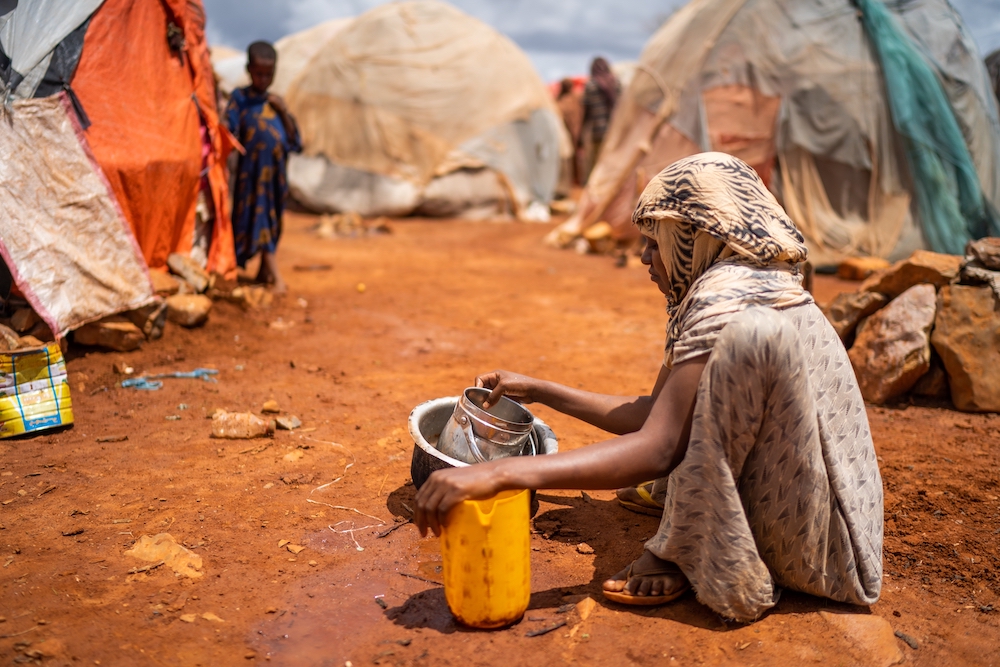
Take the devastating drought in Somalia, which killed 43,000 people last year and half of whom were under 5 years old. Ranked second highest for climate vulnerability, Somalia is on the brink of a prolonged famine that could be avoided with adequate climate adaptation investment. Yet, it only received less than a dollar per person of adaptation funding per year. Dominica, ranked 94th most vulnerable, received US$55 per person in comparison.
On average, the top 30 most vulnerable countries only received US$0.9 per capita climate adaptation funding, while low-vulnerability countries received on average US$10.8 per capita climate adaptation funding. This is not only counterintuitive, but deeply immoral.
The Invisible Barriers of the Green Climate Fund (GCF)
Access to the Green Climate Fund (GCF), the single largest source of global climate finance to developing countries for climate adaptation and mitigation, is obstructed by the complexity and the technicality of its climate funding application process.
The first step – nominating a “national designated authority” to act as the interface between governments and GCF – is not too challenging. 51 out of 54 African nations have a national designated authority since GCF’s establishment in 2015.
The obstacle lies in getting institutions accredited with the GCF, a prerequisite for public institutions, private companies, and civil society organizations to directly apply and access the GCF for climate financing. The intention is to have diverse local stakeholders’ involvement to ensure GCF-funded projects match local needs and are aligned with the national climate plan.
Many developing countries, however, are unable to jump through “hoops” to complete the 67-page accreditation form. Common bottlenecks include absence of traditional standards, such as fiduciary compliance, anti-money laundering structures, environmental, social and gender policies, and compliance mechanisms.
The extreme delays in accreditation procedure have become demoralising and deterred many countries from working with the GCF. The process designed to take 6 months has on average taken 728 days with even longer lead times for African nations. The African Development Bank waited for more than 2 years to secure fast-track accreditation – a process that should have taken 3 months – and over 4 years for the Accreditation Master Agreement to be effective. The South African National Biodiversity Institute waited for over 4 years. In Tunisia, 10 entities applied for accreditation 6 years ago; none have been approved, and only 2 are still in process.
As of this year, only 13 African countries have accredited entities to access the GCF funding.
Those who do not have direct access could still receive GCF funding through international intermediaries, such as regional development banks, the World Bank, and UN agencies. Even then, just 18% of GCF financing went to projects in the world’s poorest countries, while the bulk of climate financing went to middle-income countries in 2019. Without direct access to the funds, capacity building in the local context is non-existent.
Restructuring and Rebuilding to Pave the Path for the Future
The magnitude and scale of global climate finance’s inaccessibility is obvious. Ultimately, there needs to be a restructuring of current climate finance structures, so that global resources are able to reach the most vulnerable places.
First and foremost, climate adaptation financing should not be perceived as humanitarian aid to save low-income countries, which is an unhelpful ideological categorisation. It is, in principle, a moral imperative given the unequal contributions of Western economies to climate change. Climate action should not be a tool to reassert the colonial power dynamics which overtly or inadvertently dominate less powerful countries.
Secondly, all parties need to be held accountable for their financial commitments toward adaptation. Enough time has been lost in executing the $100 billion pledge to not be met year after year. The 2022 agreement on tackling ‘loss and damage’ – already long overdue – must be confirmed at this year’s COP28 with the best interests of the targeted countries in mind.
Most importantly, the structural barriers that excludes the most vulnerable countries from access to climate funding should be addressed urgently. The irony to the global climate financing structure is that the most vulnerable countries are excluded from accessing the funds intended to reduce climate vulnerabilities, simply because they are too vulnerable. The international community needs to create a supportive framework to set up the infrastructures needed and to incentivize long-term climate action investments in low-income countries. Only with impactful and accessible climate financing can climate resilience be achieved.
“
Climate adaptation financing should not be perceived as humanitarian aid to save low-income countries, which is an ideological categorisation that is unhelpful.
No one would support a suggestion that low-income countries, like Somalia and Pakistan, should bear the brunt of climate change. But this is the reality. Turning a blind eye to the alarming shortcomings of current climate financing structures is a tacit endorsement of this abhorrent position.
Instead of further institutionalising the exclusion of vulnerable countries from accessing lifesaving funds, we should dismantle current climate finance structures and build again, so that global resources can reach those who need them the most.
All eyes are now on the horizon in search of the watershed moment. The recent Paris Climate Finance Summit (22 and 23 June 2023) had a promising goal to build a more inclusive global financial system for developing countries, but it came and went as another missed opportunity. The lackluster attendance from rich countries reflected once again their ‘unwillingness to do much more than talk’. Ideas to reform the structures of development agencies fail to address the needs of developing countries, and the promises made at the summit totalled to a meager US$50 billion to US$200 billion, much of which will be slow to trickle in if it arrives at all.
The pattern of perfunctory gestures must come to an end if we are to make actual progress. The clock to act on climate change is ticking.

Eric Stryson is Managing Director of the Global Institute For Tomorrow (GIFT) in Hong Kong. He possesses expertise in governance, business model innovation, leadership transformation, talent development, and sustainability. He coaches leaders from business, government, and civil society to critically examine their roles, look beyond conventional wisdom, deepen their understanding of global issues, and take ownership of their impact on their organisations and society at large.